Summary
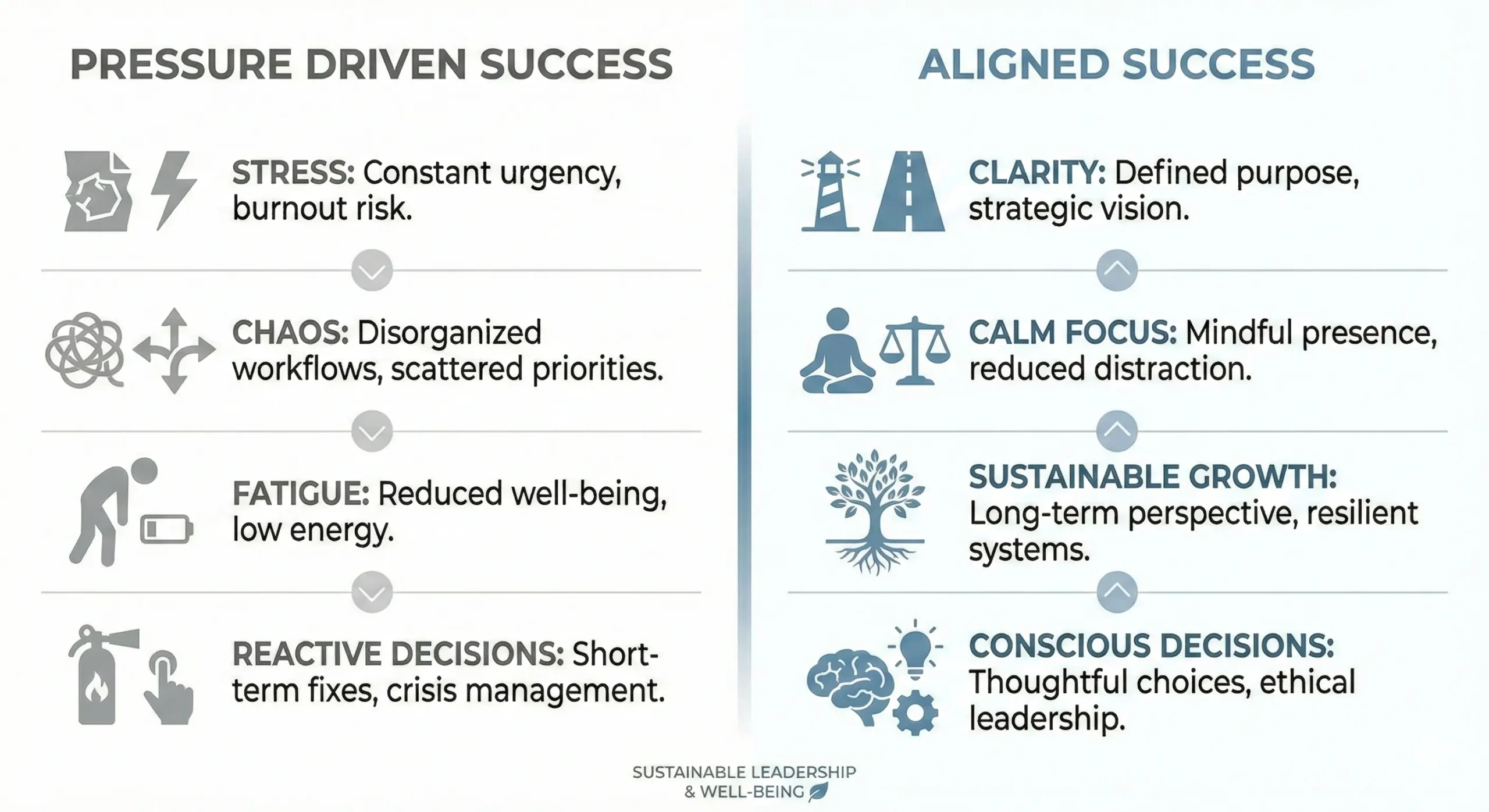
Conscious leadership is the practice of leading from inner clarity rather than pressure. It integrates self-awareness, emotional intelligence, and aligned decision-making to unlock a mindset that delivers sustainable results without burnout. Leaders who work with a consciousness mentor learn to reduce inner noise, improve judgment, and create long-term impact for themselves, their teams, and their organizations.
Introduction: Why Many Capable Leaders Still Feel Stuck
Most leaders I meet are intelligent, experienced, and hardworking. Yet many quietly admit something feels off. Decisions take longer. Pressure feels heavier. Success does not bring the calm it promised.
This is not a skill problem.
Neither a motivation problem.
It is an inner alignment problem.
Conscious leadership exists for this exact moment. It does not slow down leaders, but it helps them move fast as they learn to operate from clarity rather than constant inner pressure. When leadership shifts internally, performance changes externally.
A Story From the Real World
A few years ago, a senior executive came to me. On paper, everything was working. Revenue was growing. The team was capable. The organization and his people loved and respected him.
Yet he said something simple and honest:
“I feel like I’m always reacting. Nothing attracts me any more. I do not know who I am?
Meetings left him drained. Decisions followed him home. Sleep was light. He was not failing in business, but his mental and physical health were falling.
We did not start with a strategy.
We started with stillness.
As inner noise reduced, something interesting happened. His thinking became faster, not slower. Conversations became clearer. Decisions felt cleaner. His leadership presence changed, and so did the energy of his team.
That is conscious leadership in action.
What Is Conscious Leadership Really About?
Conscious leadership is not about becoming softer. It is about becoming clearer.
It focuses on how a leader relates to:
- Pressure
- Uncertainty
- Power
- Success and failure, and
- People
Human Centricity which is an important trait of Conscious Leadership emerges when leaders stop operating on autopilot and start responding consciously. This shift changes how they listen, decide, communicate, and influence.
The goal is not perfection.
The goal is connection, compassion and coherence.
The S.H.E. Framework: How Inner Work Translates to Outer Results
Spiritual Dynamics (S): Inner Stability
At the spiritual level, leadership begins with awareness. It is the ability to observe inner reactions instead of being driven by them. In simple words becoming aware ‘why do you think and behave the way you do?’
When leaders develop inner stability, they stop reacting from fear, ego, or urgency. Calm becomes a resource, not a luxury.
Human Potential (H): Clarity and Presence
As inner conflict reduces, human potential surfaces naturally. Focus improves. Emotional intelligence rises. Communication becomes grounded.
Economic Strategy (E): Sustainable Outcomes
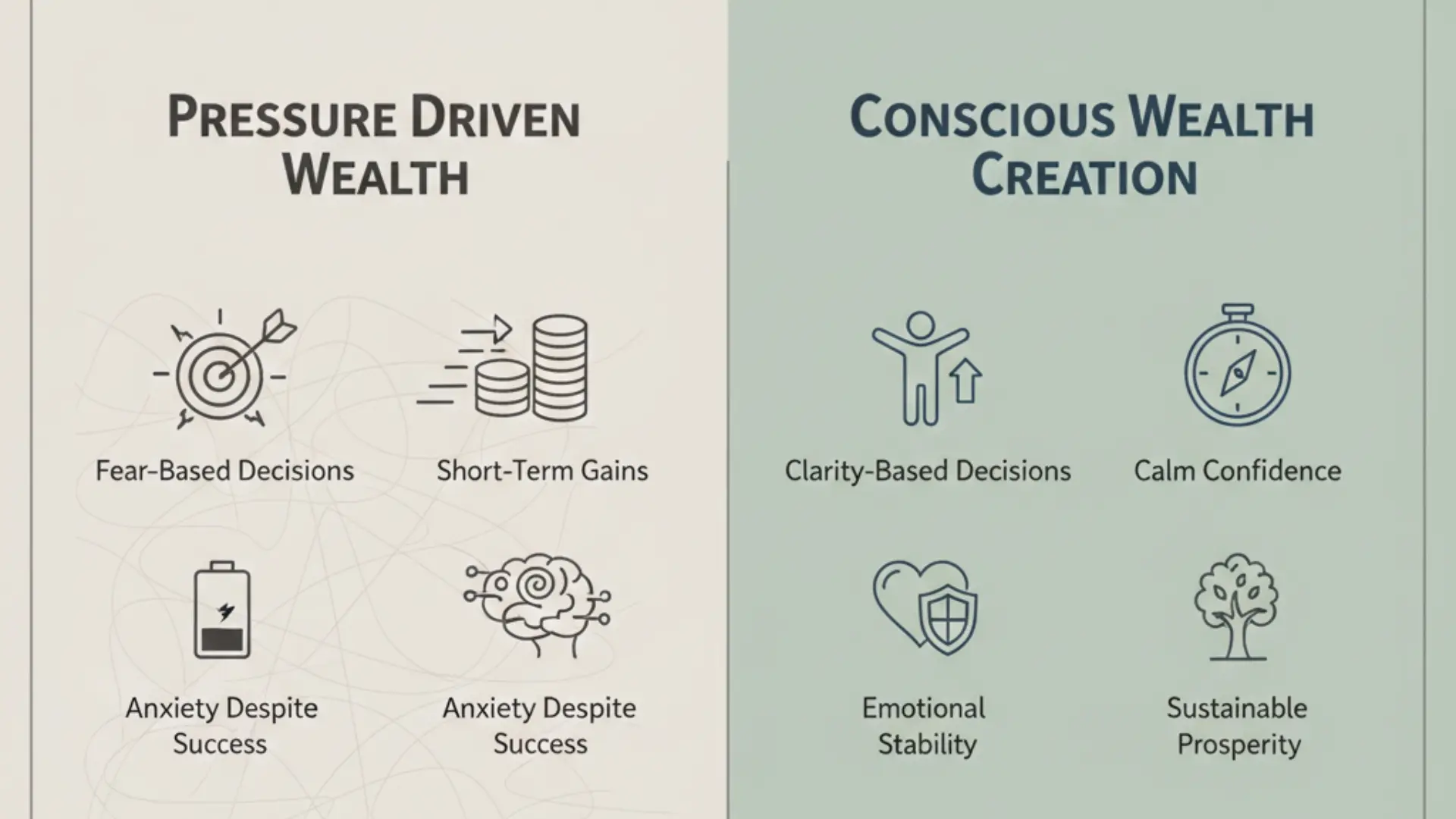
Profits become purposeful and money becomes a means to an end. Conscious leaders focus equally on profits, people and the planet. They are conscious of the advantages of ethical behaviour and constantly add value to their customers. This endears businesses to the public and the public rewards them with loyalty. This is the often-missed truth. Inner alignment is an economic advantage.
Why Transformational Leadership Is an Inside-Out Process
Many leadership models focus on influence, communication, or vision. These matter, but they collapse under pressure if the inner system is unstable.
A conscious leadership mindset is not created by inspiration alone. It is created by alignment between values, decisions, and actions.
When leaders are not conscious, teams feel it. When leaders are conscious, teams trust them even before results show.
People do not just follow strategies.
They follow states of being.
The Hidden Cost of Unconscious Leadership
Unconscious leadership often looks successful on the outside but expensive on the inside.
It shows up as:
- Decision fatigue
- Emotional leakage in meetings
- Overthinking despite experience
- Quiet burnout masked as ambition
Conscious leadership addresses these costs at the root rather than managing symptoms.
What Changes, When Leaders Become Conscious
Leaders who commit to conscious leadership often notice:
- Decisions feel lighter and clearer
- Pressure no longer hijacks judgment
- Authority feels natural, not forced
- Success becomes sustainable, not draining
- Increased love, acceptance and credibility
This is not about doing less.
It is about doing the right things from the right inner place.
A Quiet Closing Thought
Leadership today is not limited by intelligence, access, or opportunity. It is limited by inner noise.
When leaders stabilize their inner world, human potential is expressed fully, and economic outcomes improve naturally. This is the work of conscious leadership. This is the role of a consciousness mentor.
If this perspective resonates, it may be worth exploring what shifts when leadership becomes conscious rather than compulsive.