Summary
Leadership without burnout becomes possible when inner peace stabilizes the inner operating system. Calm reduces inner friction, improves decision quality, and allows human potential to express fully. When inner peace is present, performance multiplies without increasing pressure, enabling success without burnout and purpose aligned prosperity.
Introduction: From Living by Default to Living by Design
Most leaders believe pressure sharpens performance.
Actually it does not.
Pressure only sharpens urgency. It does not sharpen intelligence.
What actually improves leadership performance is not more effort, longer hours, or stronger control. It is inner stability. This is the part rarely spoken about in boardrooms and strategy decks.
Many founders, CEOs, and senior leaders sense this quietly. On the outside, success looks solid. Revenue is growing. Teams are functioning. Decisions are being made. Yet internally, something feels strained. Decision fatigue sets in. Inner conflict grows. Rest stops working.
This is not a personal failure.
This is a system issue.
At Sandeep Amar Guppta, the work begins by helping leaders see what they are actually operating from. Most people live by default, driven by conditioning, pressure, and expectations. Few consciously design their inner operating system.
Leadership without burnout begins the moment this system becomes visible.
The Inner Operating System Most Leaders Never See
Every leader operates through an inner system that governs how they think, decide, and respond under pressure. This system is not taught in business schools. Yet it influences every strategic move.
When the inner system is noisy, leaders experience overthinking, reactive decisions, and emotional leakage. When the inner system is calm, leaders experience clarity, presence, and decisiveness.
This is why inner peace is not a luxury.
It is a performance multiplier.
The ancient Indian epics understood this long before modern leadership theory. In the Ramayana, Rama is not portrayed as powerful because of force. His strength comes from inner steadiness. Even in exile, uncertainty, and loss, his decisions remain clear because his inner state is anchored.
Contrast this with moments from the Mahabharata, where leaders driven by agitation and ego repeatedly make decisions that escalate conflict and destruction. The difference was never intelligence or skill. It was inner regulation.
This pattern repeats in modern leadership every day.
Why Dominant Leadership Thinking Fails
The dominant belief system in leadership still equates stress with commitment and pressure with productivity. This belief creates short bursts of performance followed by exhaustion.
What actually happens internally is simple cause and effect.
Stress narrows perception.
Narrow perception reduces options.
Fewer options increase risk.
Over time, this leads to burnout disguised as success.
Leaders do not burn out because of work alone. They burn out because their inner system is constantly in conflict with itself.
Leadership without burnout requires a different approach. It requires seeing leadership as an inside out process rather than an outside- in struggle.
The S.H.E. Framework in Action
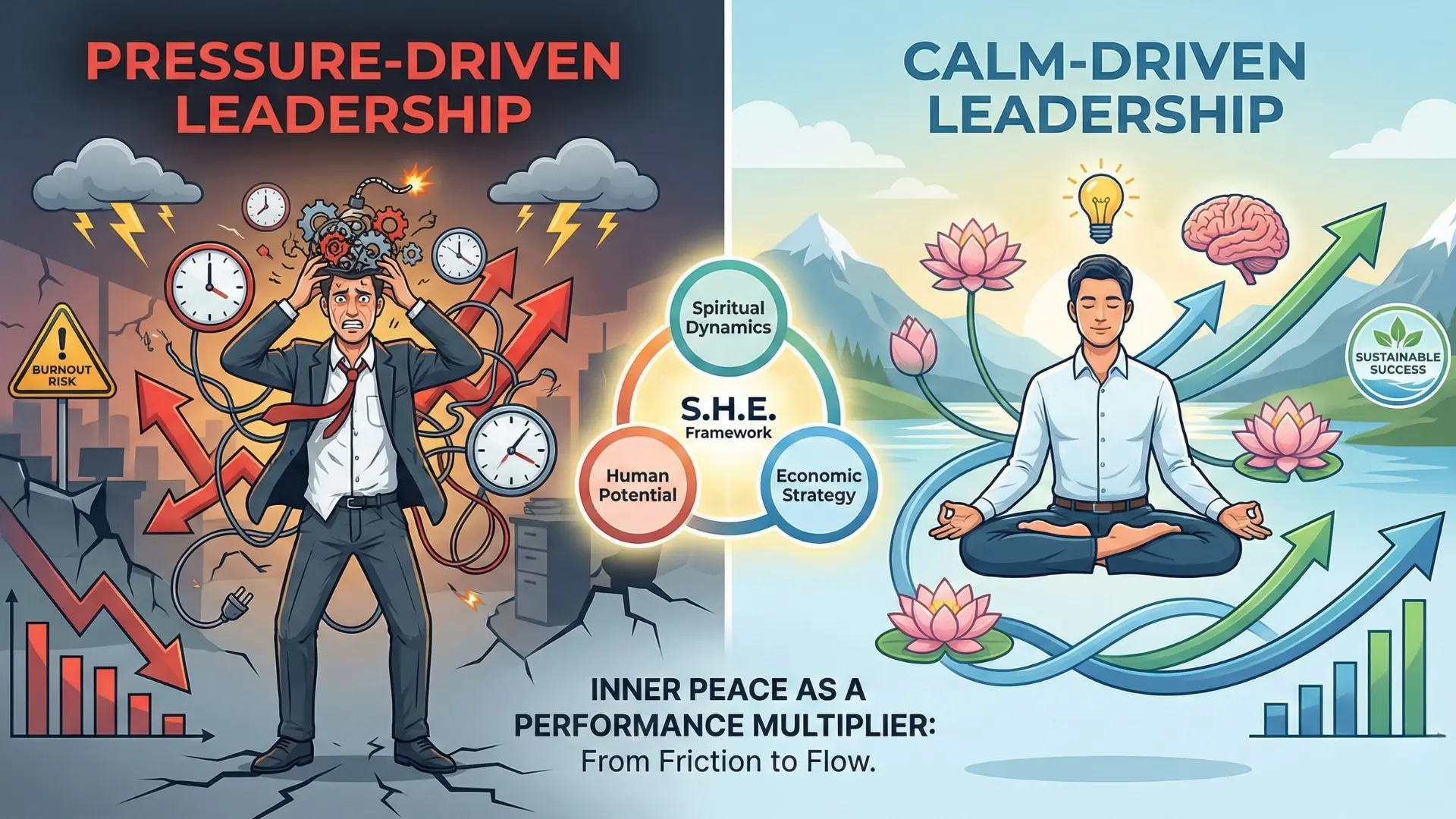
The S.H.E. Framework, is a consciousness driven integrative growth framework that integrates Spiritual Dynamics, Human Potential, and Economic Strategy into one living system. When these three move together, effort reduces and clarity increases.
Spiritual Dynamics: Inner Stability Before Strategy
Spiritual Dynamics here does not mean belief or ritual. It refers to awareness of inner state and relationship with uncertainty.
A leader with inner stability can sit with ‘’not knowing’’. They do not rush decisions to escape discomfort. They respond rather than react.
This creates emotional steadiness and freedom from compulsive action. Inner peace here becomes a stabilizing force, not passivity.
Human Potential: Clear Minds Perform Better
When the inner system is calm, human potential naturally expands.
Cognitive bandwidth increases.
Listening improves.
Emotional intelligence rises.
Leaders speak less but with more impact. Confidence becomes quiet and grounded. Decisions are made faster because there is less internal debate.
This is success without burnout in its truest form.
Economic Strategy: Calm Multiplies Outcomes
Economic Strategy reflects the inner state of leadership.
Calm leaders take fewer wrong decisions.
They handle volatility with steadiness.
They build trust faster within teams and markets.
Over time, this results in sustainable growth, lower burnout cost, and stronger execution. Purpose driven economic strategies emerge naturally when inner alignment exists.
A Simple Comparison
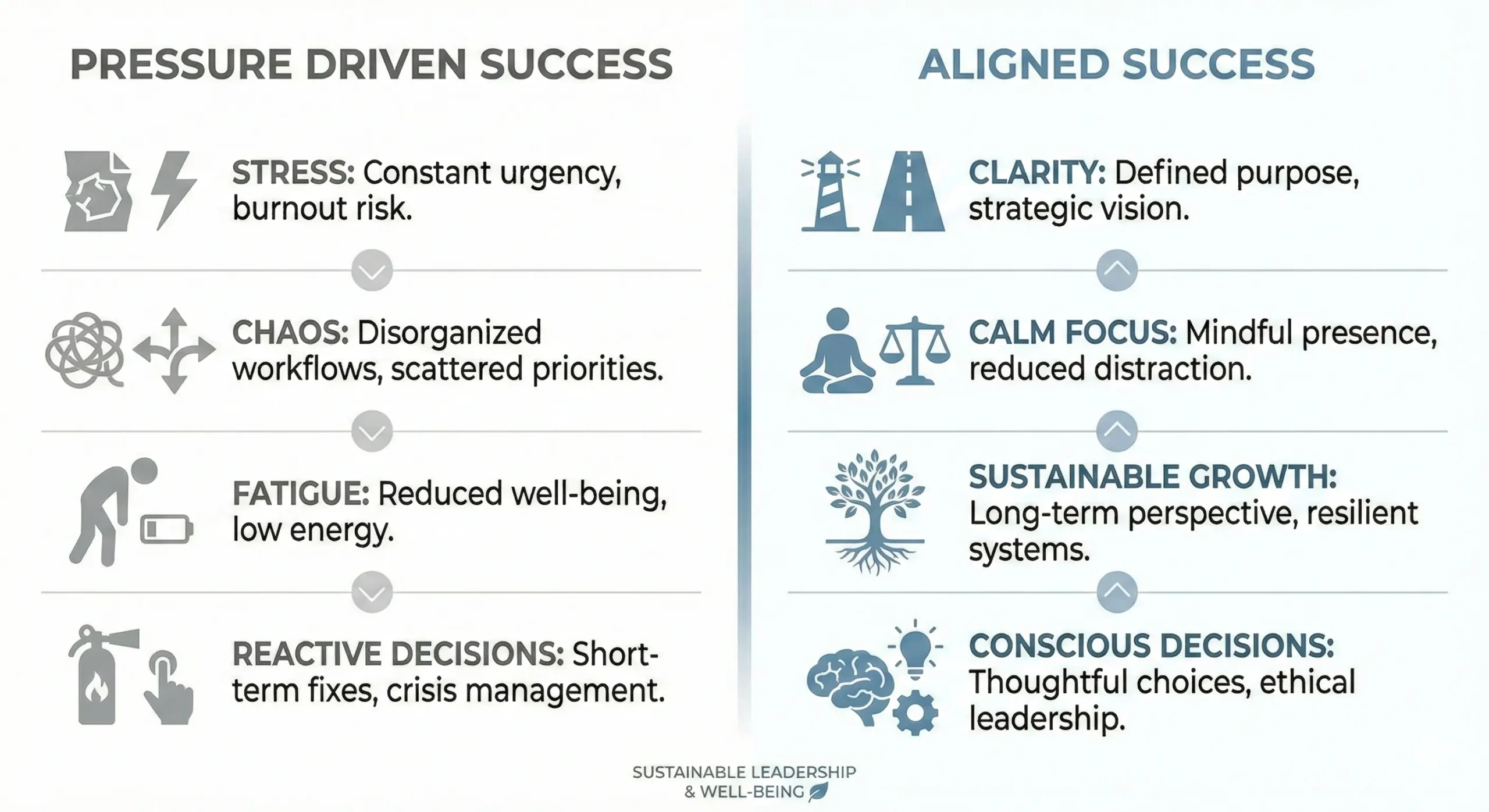
| Pressure Driven Leadership | Calm Driven Leadership |
| Reactive decision making | Responsive decision making |
| Short term wins | Sustainable performance |
| High burnout risk | Leadership without burnout |
| Fragmented focus | Integrated clarity |
| Success with inner cost | Success without burnout |
This difference is not philosophical. It is operational.
A Realistic Leadership Scenario
Consider a founder scaling a fast growing company.
Before inner alignment, every decision feels urgent. Meetings run long. Sleep is shallow. The mind never fully rests. Even good results feel heavy.
After stabilizing the inner system, something subtle shifts. The same workload exists, but the inner noise reduces. Decisions become cleaner. Conversations shorten. Trust improves.
Nothing dramatic changes externally. Yet everything feels lighter internally. This is inner peace functioning as a performance multiplier.
Practical Insights Leaders Often Miss
• Calm improves speed because it removes hesitation
• Pressure distorts judgment even in experienced leaders
• Rest without alignment does not heal burnout
• Inner noise consumes more energy than work itself
• Presence builds trust faster than competence alone
These are not techniques. They are observations from lived leadership experience.
Purpose Aligned Prosperity Is a System Outcome
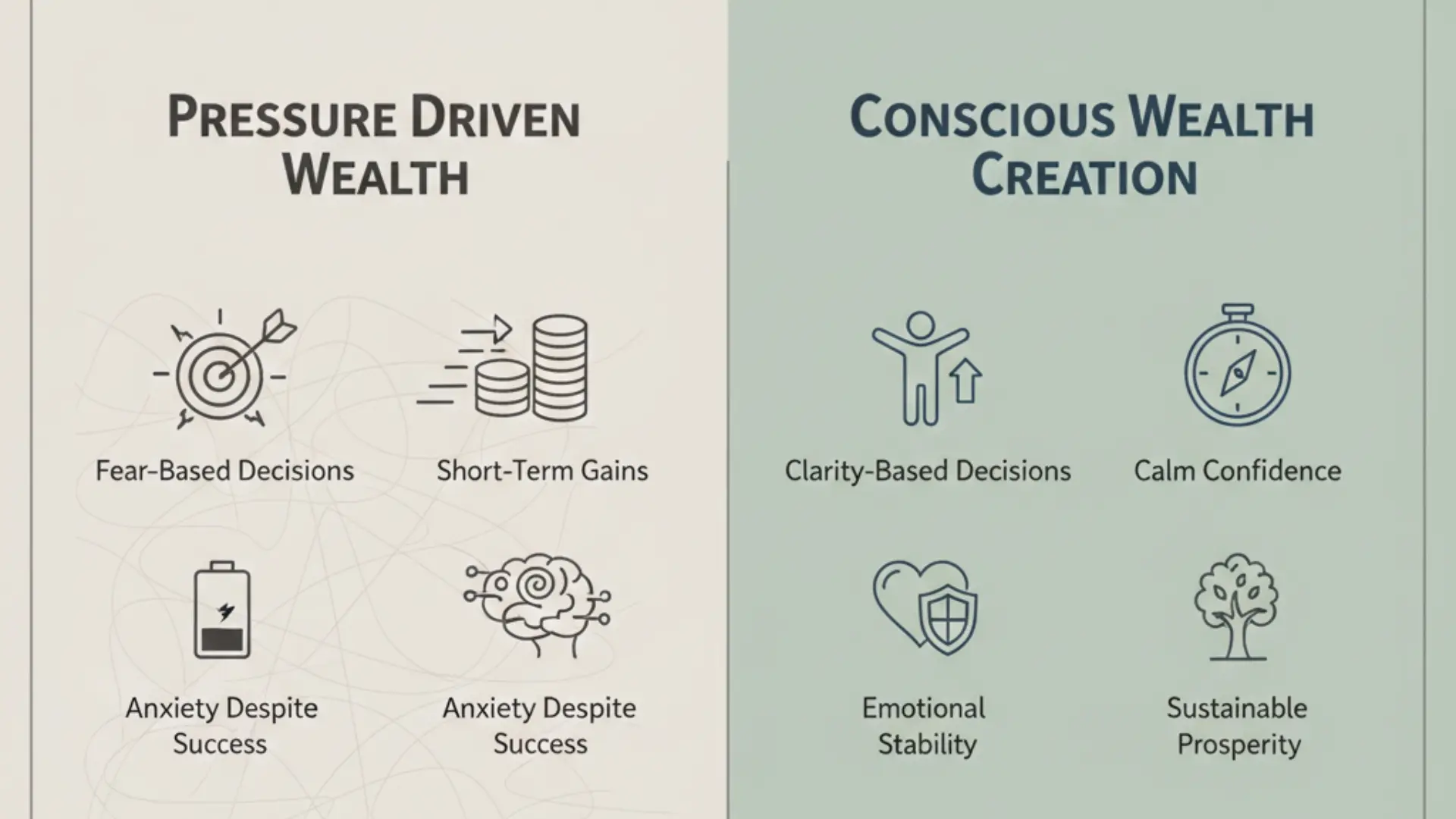
Purpose aligned prosperity does not come from chasing meaning or money separately. It emerges when inner clarity informs action.
When Spiritual Dynamics stabilize the inner state, Human Potential expresses fully. When Human Potential is clear, Economic Strategy becomes sustainable.
This integration is the foundation of leadership without burnout and success without burnout. It allows leaders to grow without fragmenting their inner world.
Soft Close
Inner peace is not withdrawal from ambition.
It is a refinement of action.
This is the work I do at Sandeep Amar Guppta.
Helping leaders see, stabilize, and redesign their inner operating system so success becomes sustainable.
If this perspective resonates, it is worth exploring.
Frequently Asked Questions
1. What does leadership without burnout actually mean
Leadership without burnout means leading from inner stability rather than constant pressure. It allows leaders to perform at a high level without emotional exhaustion, decision fatigue, or inner conflict. The workload may remain the same, but the inner experience changes.
2. How is inner peace a performance multiplier in leadership
Inner peace removes mental friction. When the mind is calm, leaders think clearly, decide faster, and communicate with precision. This leads to better outcomes with less wasted energy, making performance more effective rather than more intense.
3. Is leadership without burnout realistic in high pressure industries
Yes. High pressure environments require even greater inner stability. Leaders who cultivate calm respond more intelligently to volatility, while pressure driven leaders react impulsively. Inner peace supports resilience and sustained success.
Change block type or style
Move Heading block from position 66 up to position 65
Move Heading block from position 66 down to position 67
Change alignment
Change text alignment
Displays more block tools
4. Does inner peace reduce ambition or drive
No. Inner peace does not reduce ambition. It refines it. Leaders remain driven but are no longer pushed by fear, anxiety, or external validation. This results in purpose aligned prosperity and more consistent performance.
5. How does the S.H.E. Framework help prevent burnout
The S.H.E. Framework integrates Spiritual Dynamics, Human Potential, and Economic Strategy. When these three move together, inner conflict reduces, human capability expresses naturally, and economic outcomes become sustainable, preventing burnout at its root.
6. What is the difference between success without burnout and work life balance
Work life balance focuses on managing time and priorities. Success without burnout focuses on managing inner alignment. Even balanced schedules fail if the inner system is conflicted. Alignment restores energy without reducing responsibility.
7. Why do successful leaders still experience burnout
Many successful leaders operate with unresolved inner noise. They may have financial success but lack inner coherence. Burnout arises from internal misalignment rather than lack of capability or effort.
8. How do purpose driven economic strategies emerge from inner clarity
When leaders are internally aligned, decisions naturally reflect long term value rather than short term pressure. This creates purpose driven economic strategies that are ethical, sustainable, and resilient under change.
9. Is this approach spiritual or business focused
It is both and neither in isolation. The approach is practical and grounded. Spiritual Dynamics here refer to awareness and inner stability, not belief systems. The outcome is improved leadership performance and business results.
10. Who benefits most from leadership without burnout
Founders, CEOs, senior leaders, and high performing professionals benefit the most. Anyone experiencing success with inner strain, decision fatigue, or silent burnout can regain clarity, confidence, and sustainable momentum through this approach.