By Sandeep Amar Guppta
Acting from clarity means making decisions from Inner Growth for Leaders rather than pressure, fear, or noise.
When leaders operate from clarity, it strengthens their decision quality, aligns human potential with purpose driven economic strategies, and creates sustainable success without burnout.
Introduction – A Gentle Disruption
Most leaders believe speed comes from urgency.
They believe results come from pressure and
clarity comes after success.
In reality, clarity comes before everything else.
Many founders, CEOs, and senior leaders cannot explain why success feels heavy. They have skills, experience, teams, and resources. Yet inside, something feels unsettled. Decisions take more effort. Confidence fluctuates. Energy leaks quietly.
This is not a motivation problem.
It is not a capability gap.
It is an inner alignment issue.
When action is driven by inner noise, even the right strategy feels exhausting. When action arises from clarity, effort reduces and effectiveness increases.
This is where inner growth for leaders becomes practical rather than philosophical.
Core Insight: Why Acting From Pressure Fails
Why the dominant leadership model breaks down
Modern leadership thinking assumes that pressure sharpens performance. It assumes that constant stimulation keeps people effective. What it ignores is the internal cost.
Pressure narrows perception.
Noise fragments attention.
Fear distorts judgment.
Leaders often act quickly, but not clearly. They react rather than respond. Over time, this creates decision fatigue, emotional reactivity, and burnout.
Clarity works differently.
Clarity does not remove ambition.
It removes inner friction.
When the inner system is stable, intelligence functions fully. Choices become cleaner. Communication becomes precise. Energy is conserved rather than consumed.
This is not a mindset shift.
It is an operating shift.
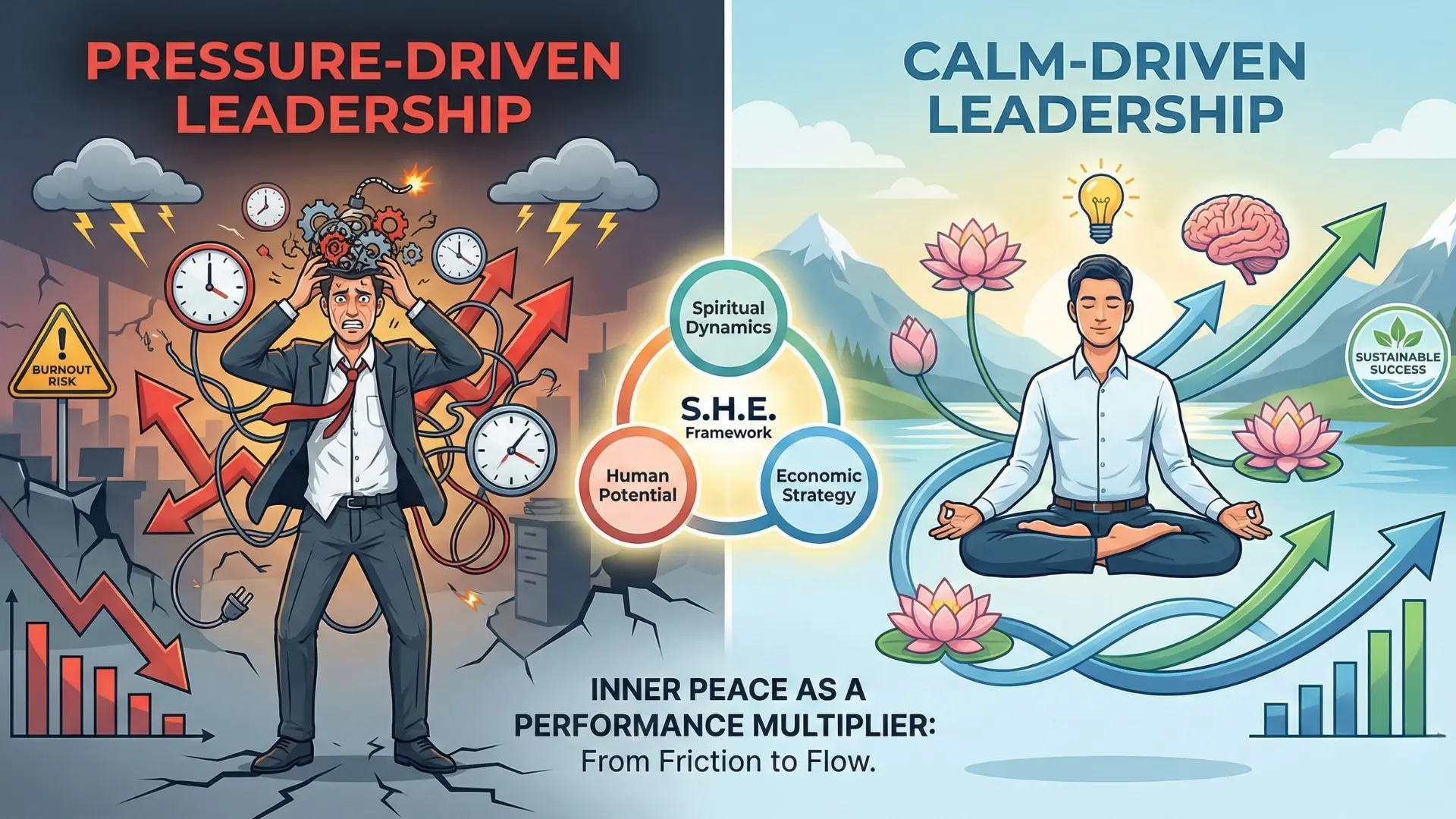
Acting From Clarity Through the S.H.E. Framework
The S.H.E. Framework integrates Spiritual Dynamics, Human Potential, and Economic Strategy into one living system.
S — Spiritual Dynamics: Inner Stability
At the spiritual level, clarity means understanding the way in which the humans and their ecosystem works.
It is the capacity to remain present without inner resistance.
When leaders lack this st ability, uncertainty triggers fear, urgency, or overcompensation. When inner stability exists, uncertainty becomes navigable rather than threatening.
Spiritual dynamics here show up as:
- Reduced inner conflict
- Non-reactive awareness
- Acceptance without passivity
This creates a calm internal ground from which clarity can arise naturally.
H — Human Potential: Clean Access to Intelligence
Human potential is not about adding more skills. It is about removing interference.
Inner noise blocks access to existing capability. Overthinking, emotional residue, and identity pressure reduce cognitive bandwidth.
When clarity is present:
- Thinking becomes fluid
- Emotional regulation improves
- Confidence stabilizes
- Presence increases
Leaders act with fewer second guesses. Conversations land better. Decisions require less recovery time.
Human potential expresses itself fully only when the inner environment is quiet enough to support it.
E — Economic Strategy: Sustainable Execution
Economic outcomes always reflect inner alignment.
Clarity reduces costly errors.
Calm improves timing.
Presence builds trust.
Leaders acting from clarity:
- Make fewer wrong decisions
- Handle volatility with steadiness
- Sustain performance longer
- Reduce burnout-related costs
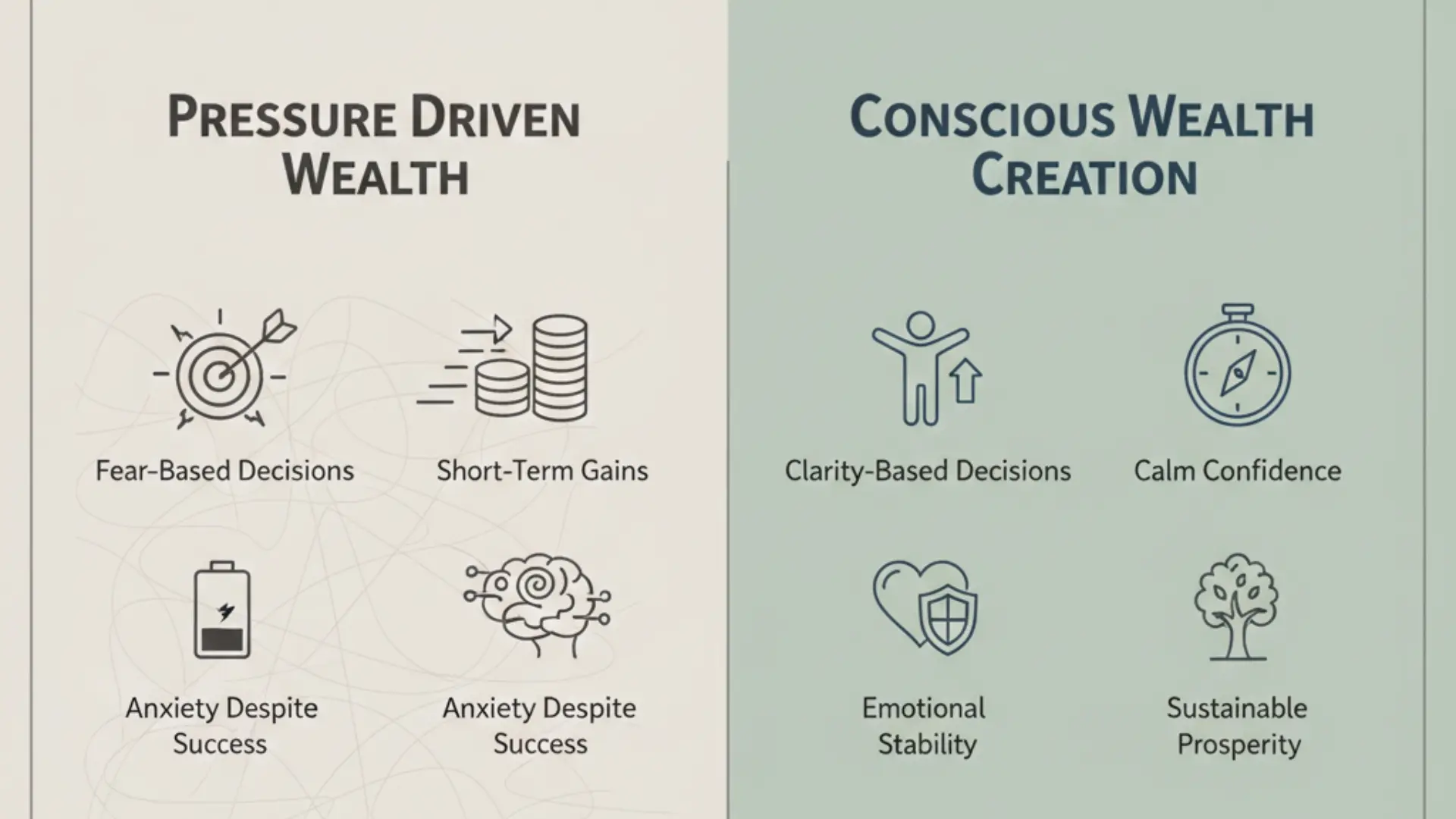
This is purpose aligned prosperity.
Results without inner damage.
Growth without fragmentation.
Economic strategy stops being reactive and becomes coherent.
A Modern Example of Acting From Clarity
A senior executive once described a moment that quietly changed how he led.
He was preparing for a critical board meeting. Numbers were tight. Expectations were high. The night before, his mind kept replaying scenarios.
He reviewed slides again and again, not because they were incomplete, but because his inner state was unsettled.
The next morning, instead of rehearsing harder, he paused. Not to motivate himself. Not to distract himself. Just to settle.
Nothing dramatic happened.
No new ideas appeared.
But the noise was reduced.
In the meeting, something shifted. He listened more than usual. He responded instead of defending. When challenged, he did not rush to justify. He clarified.
After the meeting, one board member said quietly,
“This was the clearest conversation we’ve had in months.”
The strategy had not changed overnight.
The leader had.
This is what acting from clarity looks like in real life.
No performance. No force. Just clean presence translating into better outcomes.
A Realistic Leadership Scenario
A founder running a growing organization feels constantly stretched. Decisions pile up. The team looks to him for answers. He works harder, yet clarity feels distant.
Why?
- Constant mental noise
- Fear of missing out
- Reactive decision-making
- Quiet exhaustion
Shift:
- Inner stabilization
- Reduced emotional reactivity
- Clearer prioritization
After:
- Decisions take less effort
- Communication improves
- Energy sustains
- Confidence feels grounded
Nothing external changed dramatically.
The internal operating system did.
This is personal evolution for leaders in real terms.
Practical Insights Without Instruction
- Calm improves speed because fewer corrections are needed.
- Pressure distorts judgment by narrowing options.
- Rest without alignment only pauses exhaustion.
- Inner noise is expensive in time, trust, and money.
- Clarity creates confidence without performance theater.
These are not techniques.
They are observations from lived leadership reality.
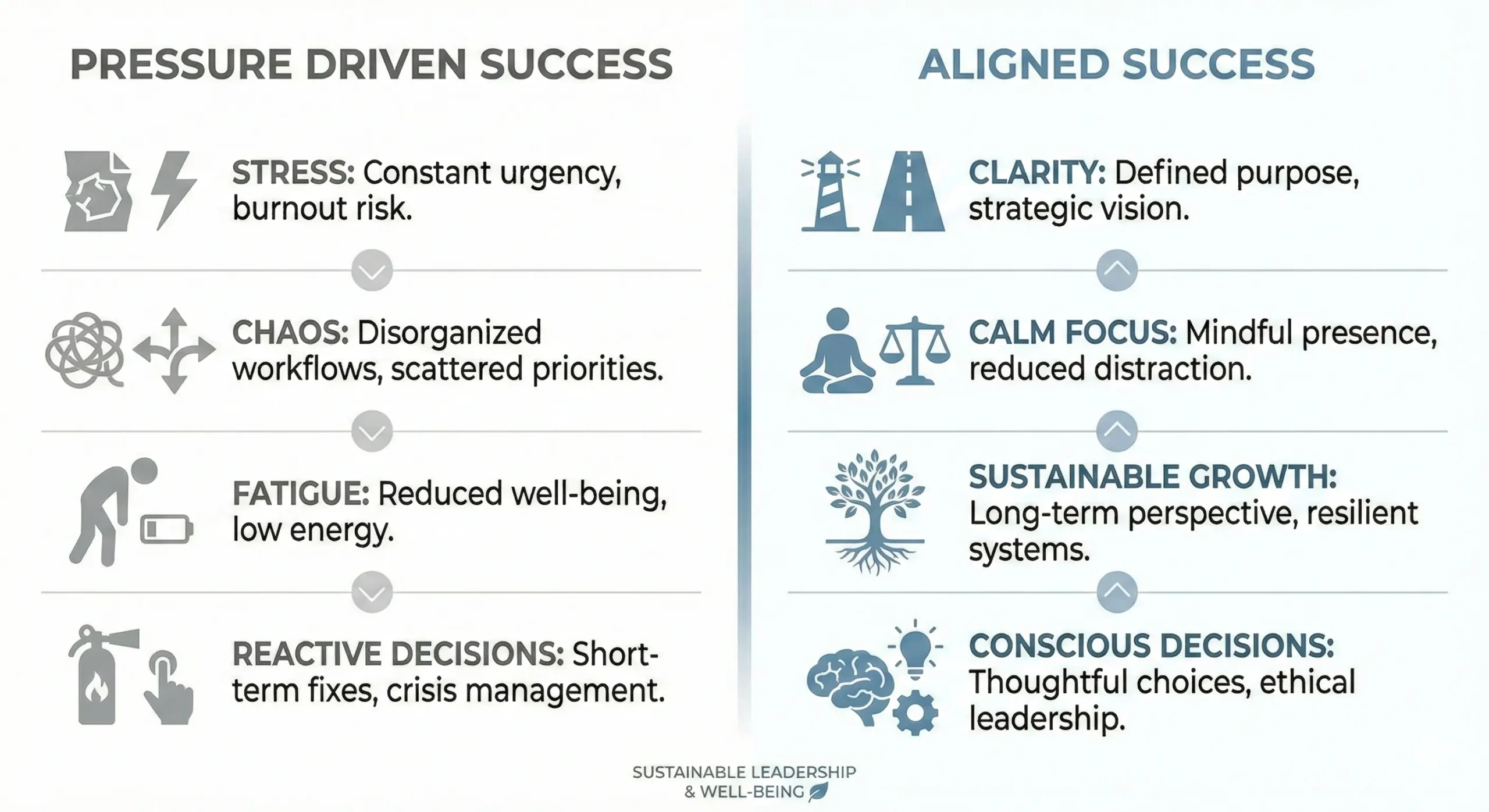
Acting From Clarity vs Acting From Pressure
| Dimension | Acting From Pressure | Acting From Clarity |
| Decision Making | Reactive, rushed | Timely, grounded |
| Energy Use | High drain | Sustained |
| Emotional State | Anxious or tense | Stable |
| Team Impact | Stress transmission | Trust creation |
| Economic Outcome | Fragile growth | Purpose aligned prosperity |
This comparison shows why an integrated approach to success outperforms fragmented effort.
Why Inner Growth for Leaders Is an Economic Advantage
Organizations do not fail from lack of intelligence.
They fail from misaligned inner systems.
When leaders act from clarity:
- Human potential expresses naturally
- Economic strategies become sustainable
- Growth aligns with purpose
This is not soft leadership.
It is precise leadership.
Clarity changes how money is earned, how power is handled, and how success is experienced.
Acting From Clarity Is Not Withdrawal
There is a misunderstanding that inner clarity slows ambition.
It does not.
It refines ambition.
Acting from clarity means fewer unnecessary battles, cleaner execution, and deeper satisfaction from work done well. It is how purpose driven economic strategies emerge without strain.
This is the essence of the S.H.E. Framework as lived experience.
Soft Close and Silent Invitation
Acting from clarity is not something to adopt.
It is something to return to.
When inner alignment stabilizes, action becomes intelligent. Growth becomes sustainable. Success feels lighter.
This is the work I do.
If this resonates, it is worth exploring.
Clarity changes everything.
FAQs
1. What does acting from clarity really mean for leaders?
It means decisions arise from inner stability rather than urgency or fear.
2. Is inner growth for leaders practical in business?
Yes. It directly improves decision quality, communication, and sustainability.
3. How does clarity affect economic outcomes?
Clarity reduces costly mistakes and improves execution and trust.
4. Is this approach spiritual or strategic?
It is both, integrated through the S.H.E. Framework.
5. Can clarity exist under pressure?
Yes. Clarity stabilizes performance precisely during pressure.
6. How is this different from mindfulness?
This focuses on functional inner alignment, not practices or rituals.
7. Does clarity reduce ambition?
No. It removes inner friction, not drive.
8. What leaders benefit most from this approach?
Founders, CEOs, and high-performing professionals facing inner strain.
9. Is this relevant for fast-growing organizations?
Especially. Growth amplifies inner misalignment if left unaddressed.
10. What is the first sign that clarity is missing?
Persistent overthinking despite experience and competence.