Summary
Business aligned with spirituality is not about religion, belief, or slowing ambition. It is about integrating inner clarity with outer execution. When leaders operate from a calm, conscious inner state, their human potential is expressed fully and economic outcomes improve naturally. This is the essence of the S.H.E. Framework, where Spiritual Dynamics stabilize Human Potential, enabling sustainable and profitable Economic Strategy.
Why Business Success Without Inner Alignment Feels Fragile
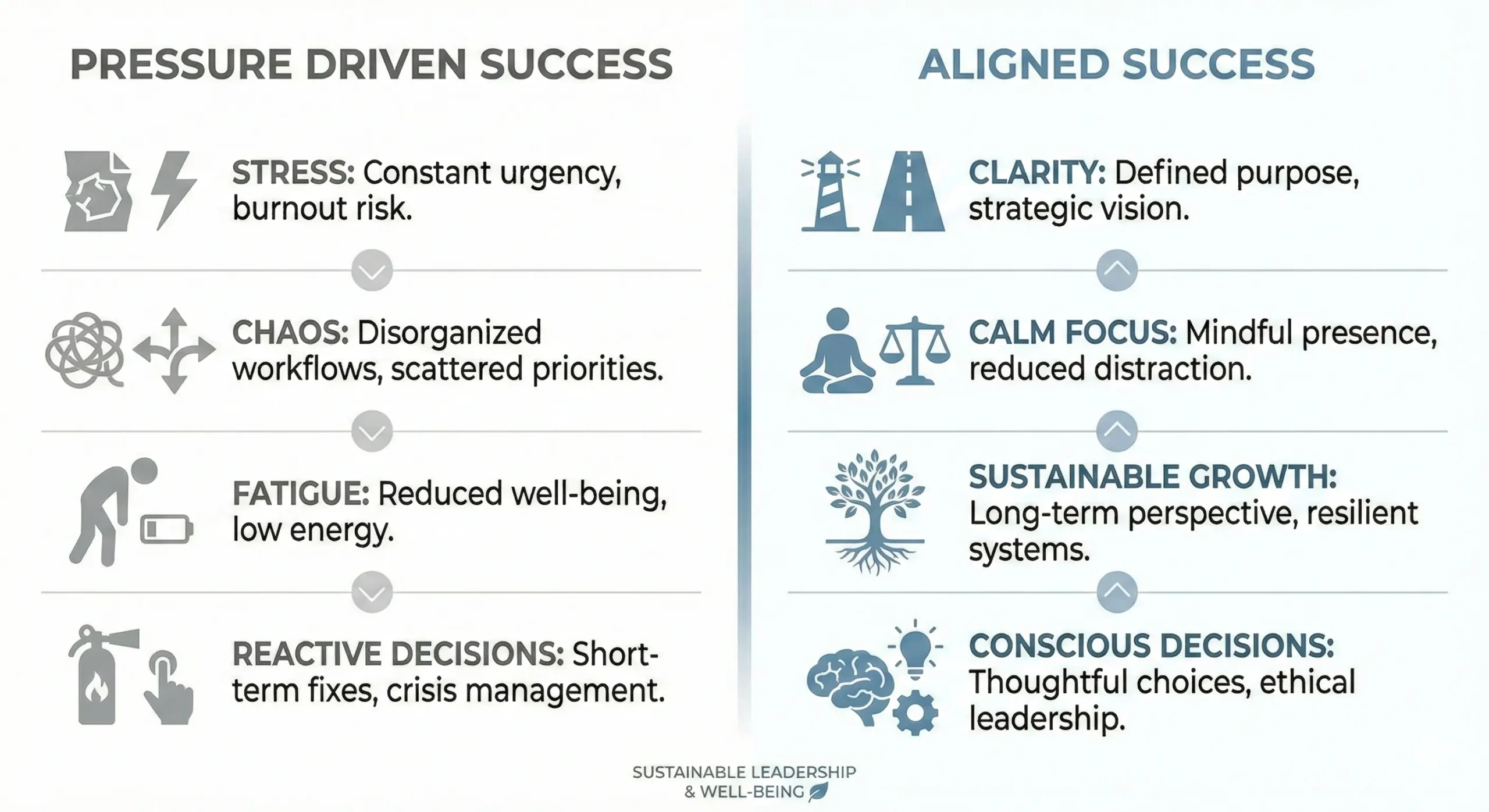
Modern leadership is saturated with strategies, tools, and performance frameworks. Yet many leaders quietly experience stress, decision fatigue, and burnout even while achieving visible success. The reason is simple but rarely addressed. Growth is being driven without inner stability.
Most business models reward pressure, urgency, and constant output. They assume stress equals drive and speed equals effectiveness. In reality, pressure narrows perception. It reduces listening, distorts judgment, and weakens decision quality. What looks like momentum often hides internal fragmentation.
Business aligned with spirituality offers a different foundation. It does not remove ambition. It removes inner friction. And when friction reduces, clarity increases. Clarity is what sustains high performance without inner cost.
What Does It Mean to Align Business With Spirituality?
Spirituality in leadership is often misunderstood.
When spirituality is integrated into business, leaders are no longer driven purely by fear, ego, or external validation. Decisions arise from awareness rather than reaction. Action comes from coherence rather than compulsion.
This integration is not soft. It is highly strategic.
RIGHT PURPOSE X RIGHT MINDSET = RIGHT ACTION = Sustainable Success without Burnout
The S.H.E. Framework: Where Inner Clarity Drives Profitability
The S.H.E. Framework brings structure to what many sense intuitively but struggle to articulate. It shows how inner awareness directly influences outer results.
Spiritual Dynamics (S)
Spiritual dynamics refer to the inner environment of the leader – his/her operating system. This includes emotional regulation, non-reactivity, acceptance of uncertainty, and freedom from compulsive patterns. When the inner system is calm, leaders stop leaking energy through anxiety, overthinking, or constant self-pressure.
This inner stability becomes the ground from which clear leadership emerges.
Human Potential (H)
Human potential does not expand by adding more skills under stress. It expands when inner noise reduces. A calm inner state increases cognitive bandwidth. Listening improves. Creativity opens. Confidence becomes natural rather than forced.
Leaders begin to think faster, not slower. Communication becomes clearer. Presence becomes felt without effort.
Economic Strategy (E)
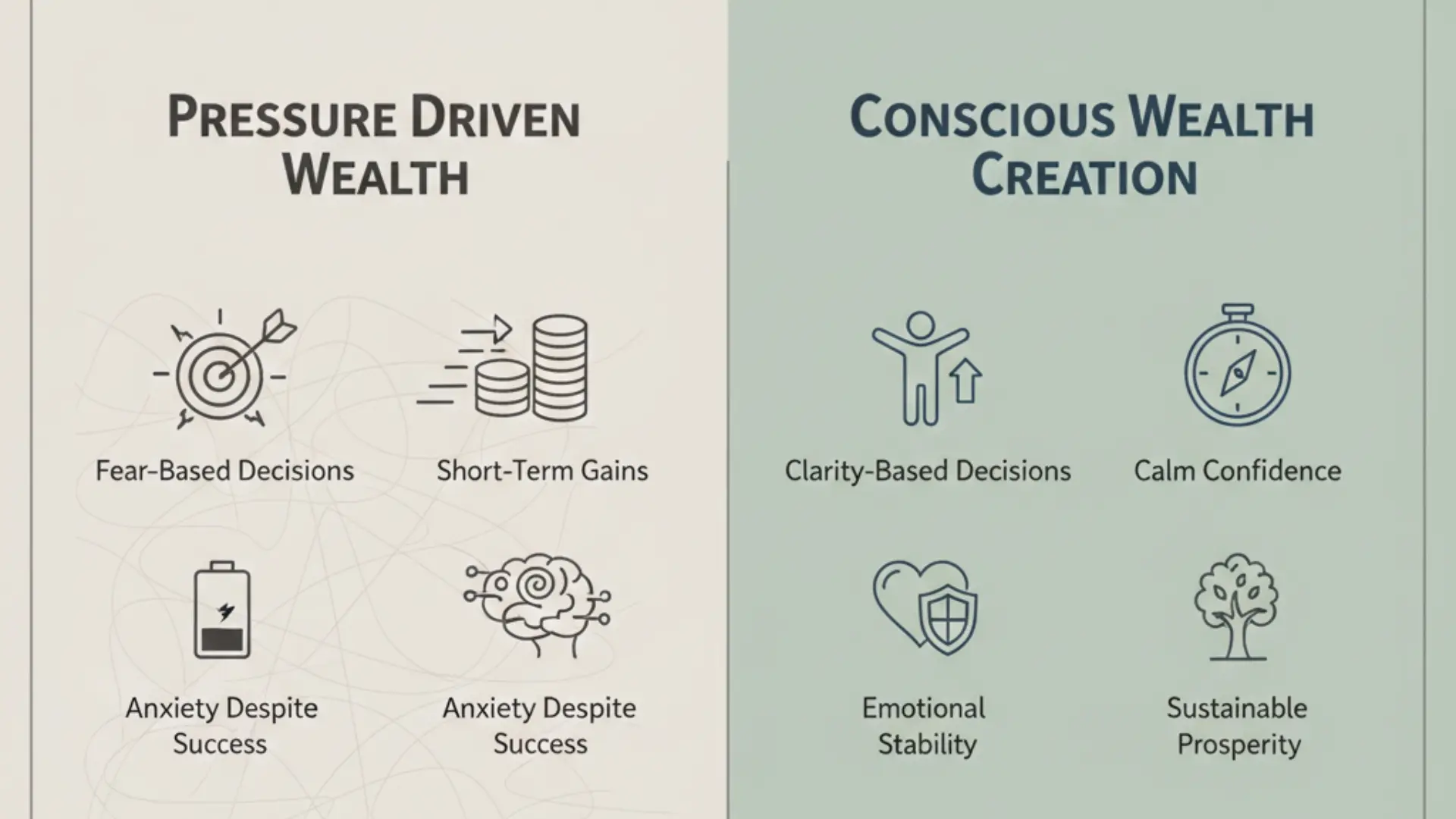
Economic outcomes are shaped by quality decisions in conjunction with appropriate actions. . Calm leaders are inclusive and make fewer wrong decisions. They manage the volatility of money better, build trust, and respond to situations leading to sustained performance and growth. Teams feel safer, execution improves, and burnout costs reduce significantly.
Practice of Spiritual Dynamics leads to clarity. Clarity leads to better decisions. Better decisions lead to better outcomes. This is how spirituality promotes profitability.
Spirituality and Profitability Are Not Opposites
One of the biggest myths in leadership is that inner work makes leaders less competitive. The opposite is true. Internal awareness removes distortion. Distortion is what creates costly mistakes, misaligned growth, and fragile success.
Organizations led by conscious leaders experience fewer internal conflicts, clearer priorities, and more resilient cultures. Profitability improves not because of harder effort, but because of cleaner execution.
This is why the role of a consciousness and profitability keynote speaker is becoming increasingly relevant. Leaders are not looking for motivation. They are looking for clarity that works under pressure.
A Simple Leadership Scenario
Consider a founder leading a rapidly growing company. Revenue is rising, but decisions feel heavy. Every choice carries pressure. Meetings feel reactive. Sleep is disturbed despite success.
When this leader stabilizes inner state, something shifts. Decisions stop feeling urgent. Conversations become clearer. The same business challenges exist, but they are handled with steadiness rather than strain.
Nothing external change immediately. What changes is one’s internal alignment with his/ her spiritual operating system. Stronger the alignment, stronger the performance with improved result.
Why an Integrated Spiritual Leadership Model Matters Today
An integrated spiritual leadership model driven by spirituality as an operating system does not ask leaders to choose between results and well-being. It integrates both. It acknowledges that leaders are human systems before they are strategic assets.
This model recognizes that burnout is often misalignment, not workload. That money reflects inner relationships, not just market conditions. That presence is now a critical leadership skill in an overstimulated world.
As artificial intelligence accelerates execution, human consciousness becomes the real differentiator.
Closing Reflection
Business aligned with spirituality is not a trend. It is an evolution. As complexity increases, leaders can no longer afford inner fragmentation. Conscious leadership is not about slowing down. It is about moving with clarity, integrity, and sustainability.
This is the work of integrating spirituality, human potential, and economic strategy into one coherent way of leading.
If this perspective resonates, it is worth staying with the question it raises. Clarity changes everything.