By Sandeep Amar Guppta
Life does not announce its transitions.
One day, everything seems to work.
And then quietly, something shifts.
A role changes.
A business outgrows you.
Success no longer feels satisfying.
Pressure increases, but clarity reduces.
Most leaders experience these moments not as dramatic breakdowns, but as silent inner dissonance.
This is where leadership through life transitions comes into play.
Not in strategy rooms.
Not in productivity systems.
But inside the leader.
Sandeep Amar Guppta, views leadership through a different lens, one where consciousness drives business decisions, and growth is guided through the integration of Spiritual Dynamics, Human Potential, and Economic Strategy – THE S.H.E. FRAMEWORK.
This is not about slowing down ambition.
It is about leading consciously through change.
A Story Most Leaders Quietly Relate To
A senior executive once shared something simple yet revealing.
“I’ve achieved what I wanted. But I don’t know how to operate from here anymore.”
For him, externally his life looked perfect and successful. But the problem was internal. There was confusion, fatigue, and restlessness.
This was not a skill problem.
It was not a motivation issue.
It was a life transition challenge. The starting point of Life transition challenge is not failure, it is success that no longer fits.
And during such phases, traditional leadership advice often falls short.
This is where the work of a human potential mentor and coach becomes essential not to add more goals, but to help leaders reconnect with their innate human potential.
Why Leadership Transitions Are Inner Before They Are External
Most people treat transitions as external events:
- New role
- Career change
- Business expansion
- Personal loss or growth
But transitions are actually inner recalibrations.
When the inner system doesn’t evolve, outer success starts becoming uncertain and feeling heavy.
This is why conscious human potential development matters.
It focuses on:
- Awareness of inner state
- Clarity during uncertainty
- Stability during change
- Alignment between the inner and outer worlds.
Not through belief or ideology, but through direct experience and inner alignment.
The S.H.E. Framework Applied to Life Transitions
The S.H.E. Framework offers a grounded way to navigate leadership transitions without losing direction or self.
Spiritual Dynamics: Stabilising the Inner System
Spiritual dynamics here do not mean rituals or beliefs.
They mean your inner operating system.:
- Clarity of purpose
- Awareness of emotional reactions
- Ability to stay non-reactive during uncertainty
- Letting go of outdated identities.
During transitions, leaders often cling to who they were.
Spiritual awareness helps release that grip.
This inner stability becomes the foundation for the next phase of leadership.
Human Potential: Accessing What Already Exists
Human potential is not something to be created.
It is something to be accessed.
During transitions:
- Overthinking increases
- Confidence becomes fragile
- Decision fatigue sets in
A calm inner state restores access to:
- Intelligence
- Creativity
- Emotional intelligence
- Presence
- Purpose
This is the heart of conscious human potential development removing inner noise so natural capability can emerge.
Economic Strategy: Leading Without Burnout
When inner clarity improves, economic decisions change.
Leaders begin to:
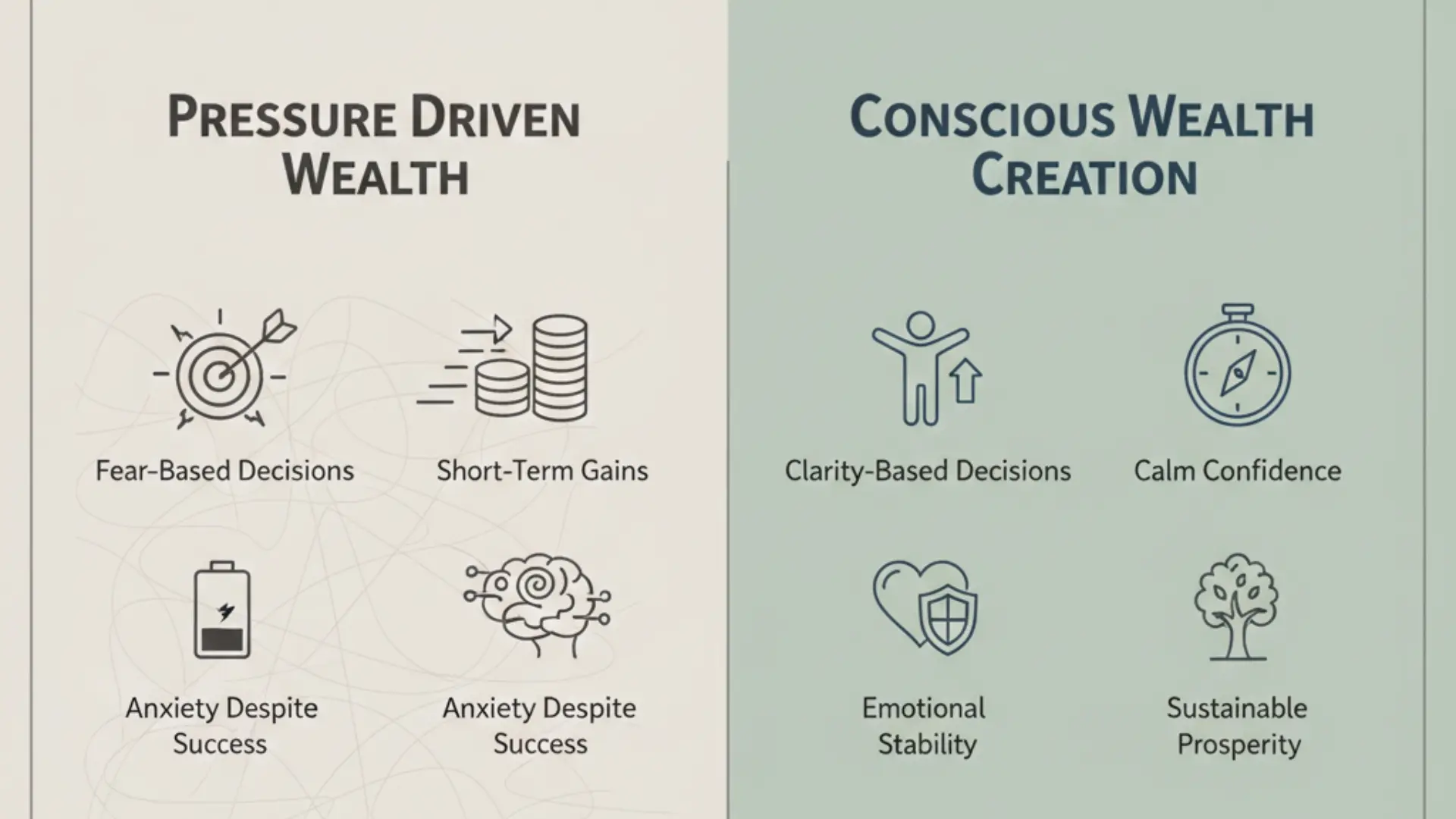
- Make fewer reactive decisions
- Build trust faster
- Sustain performance longer
- Reduce burnout-related costs
This is not spirituality replacing strategy.
It is a spiritual dynamics strengthening strategy.
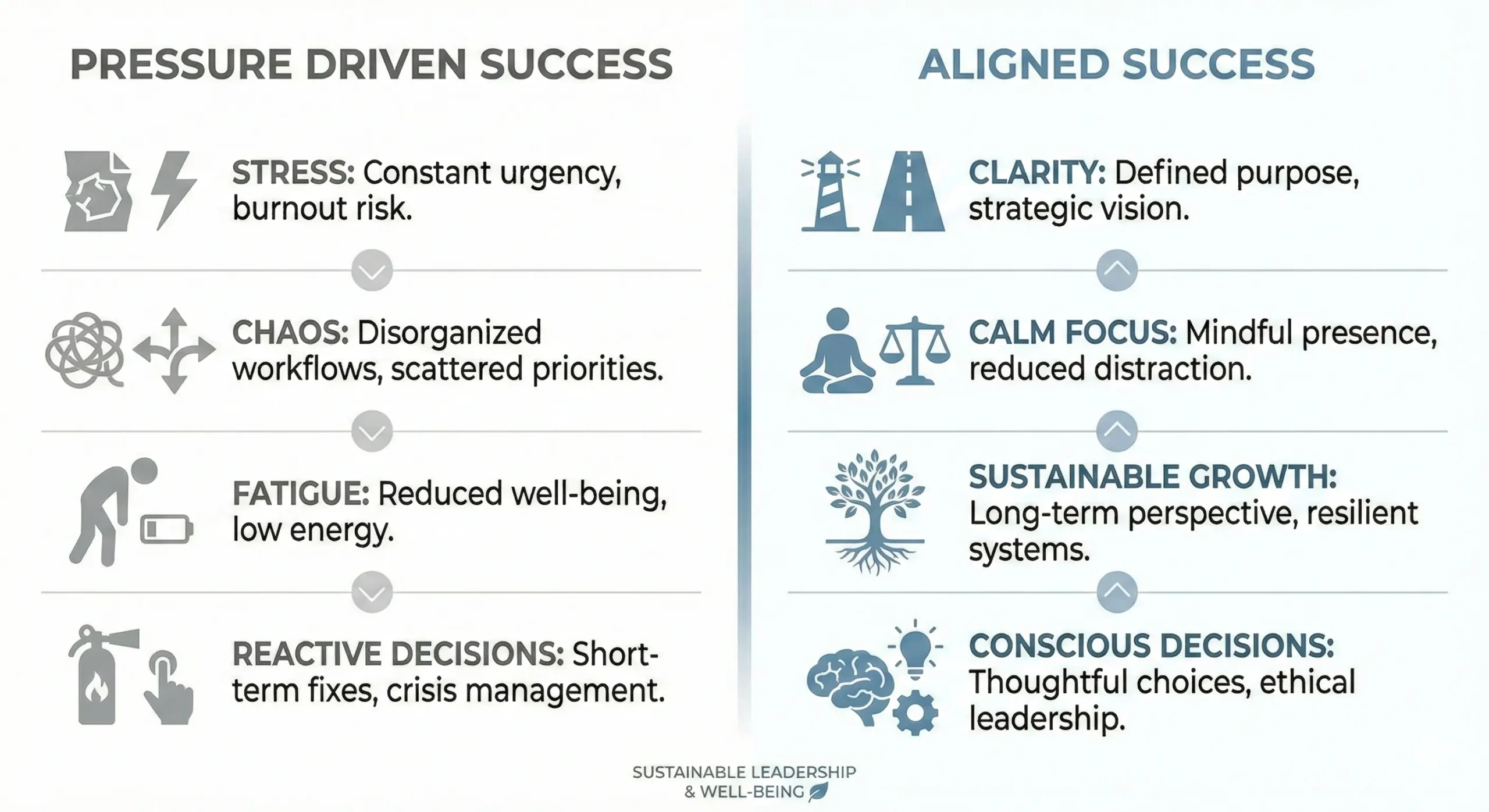
Traditional Leadership vs Conscious Leadership Through Transitions
| Aspect | Traditional Approach | Conscious Approach |
| View of Transition | Problem to fix | Phase to understand |
| Response to Uncertainty | Control and urgency | Awareness and clarity |
| Focus | External performance | Inner alignment + performance |
| Decision Style | Pressure-driven | Presence-driven |
| Outcome | Short-term results | Sustainable leadership growth |
Why Human Potential Gets Blocked During Transitions
Many leaders assume they need:
- New skills
- New frameworks
- New motivation
In reality, transitions block potential because of inner interference.
Fear of losing relevance.
Attachment to old success.
Pressure to maintain an image.
When these inner pressures reduce, capability returns naturally.
This is why working with a human potential coach during transitions is not about learning more, it is about clearing space.
Comparison Table: Skill Acquisition vs Human Potential Development
| Focus Area | Skill-Based Growth | Human Potential Development |
| Method | Adding knowledge | Removing inner noise |
| Speed Under Pressure | Slows down | Improves |
| Confidence | Conditional | Stable |
| Sustainability | Limited | Long-term |
| Leadership Presence | Performed | Felt |
What Actually Shifts
- Identity is no longer tied to outcomes
- Decisions come from clarity, not fear
- Presence replaces over-effort
Leaders who integrate spiritual dynamics into leadership transitions report something subtle but powerful:
“I’m doing less but everything works better.”
This is not a coincidence.
This is alignment.
Statistical Insight: Why Transitions Need Inner Work
| Leadership Reality | Impact |
| Leaders experiencing major transitions | ~70% report decision fatigue |
| Burnout during transition phases | Increases by 60% |
| Leaders who focus only on strategy | Higher stress, lower clarity |
| Leaders who develop inner awareness | Better decisions and resilience |
Leadership Through Life Transitions Is Not a Pause It Is an Upgrade
Transitions are not interruptions.
They are invitations.
Invitations to:
- Upgrade inner operating systems
- Redefine success
- Lead with clarity instead of pressure
At Sandeep Amar Guppta, leadership development is not about pushing harder.
It is about becoming more aligned.
When spiritual dynamics stabilise the inner world,
human potential expresses fully,
and economic outcomes improve naturally.
This is conscious leadership.
A Quiet Closing Thought
If you are in a phase where old methods no longer work,
and new clarity hasn’t yet arrived,
you are not behind.
You are transitioning.
Leadership through life transitions is not about finding answers immediately.
It is about becoming stable enough to hear them.
This is the work of conscious human potential development.
And this is the space where transformational leadership is born.