Conscious Leadership: The Gem Is Never in the Pond
May 15, 2026
By Sandeep Amar Gupta and Team
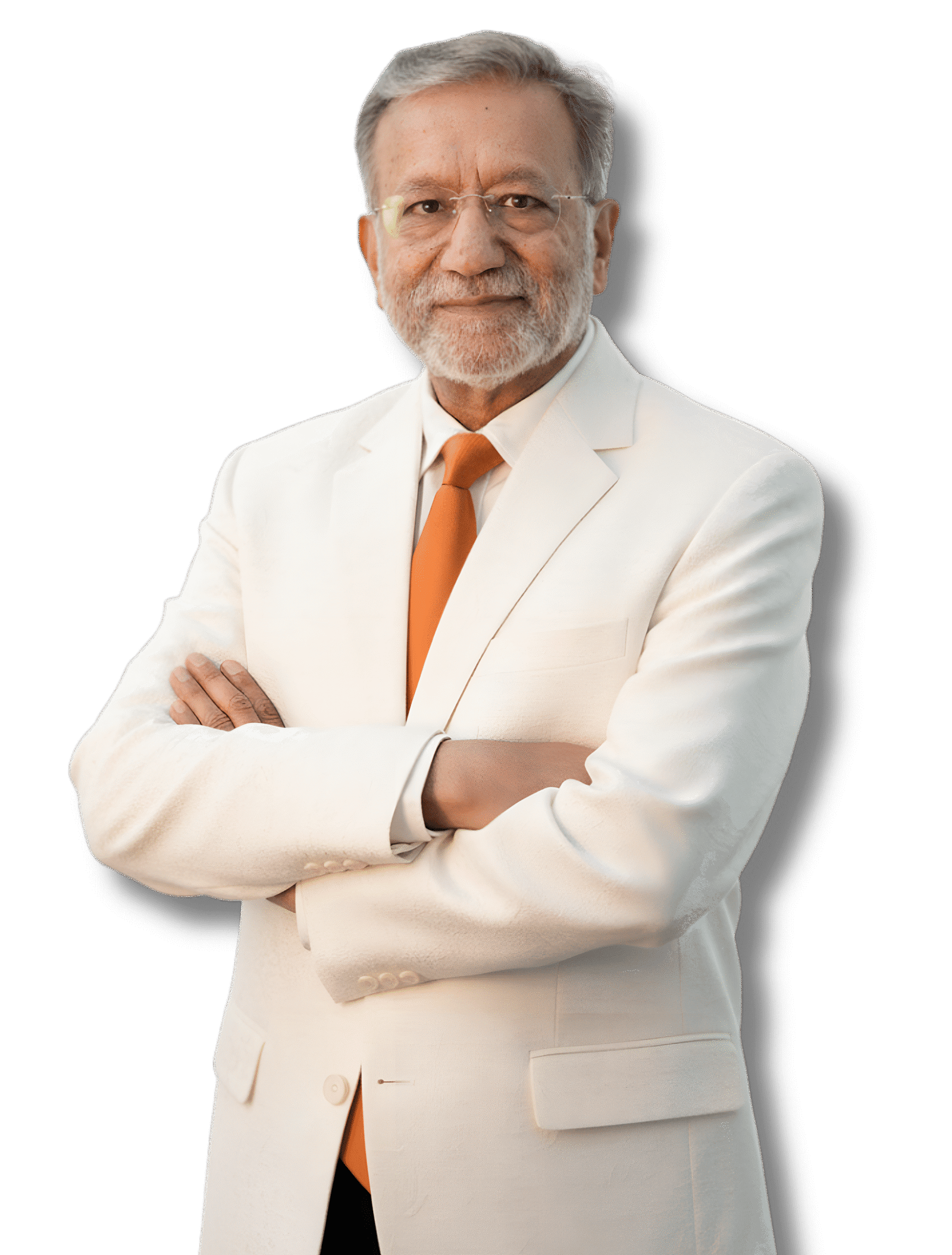
Hi! I'm Sandeep Amar Gupta
Helping harness Consciousness (Inner Operating System) for sustainable results, income & peace.
There is an ancient story from the Jataka tales that has stayed with me for years.
A king was told there was a precious gem at the bottom of a pond near the city gate. He could see it shimmering in the water. So he called his advisors. They emptied the pond. When the gem did not appear, they dug through the mud. Still nothing. They sent more men, went deeper, worked harder. The gem kept disappearing.
Finally, the king turned to his youngest advisor, Mahosadha.
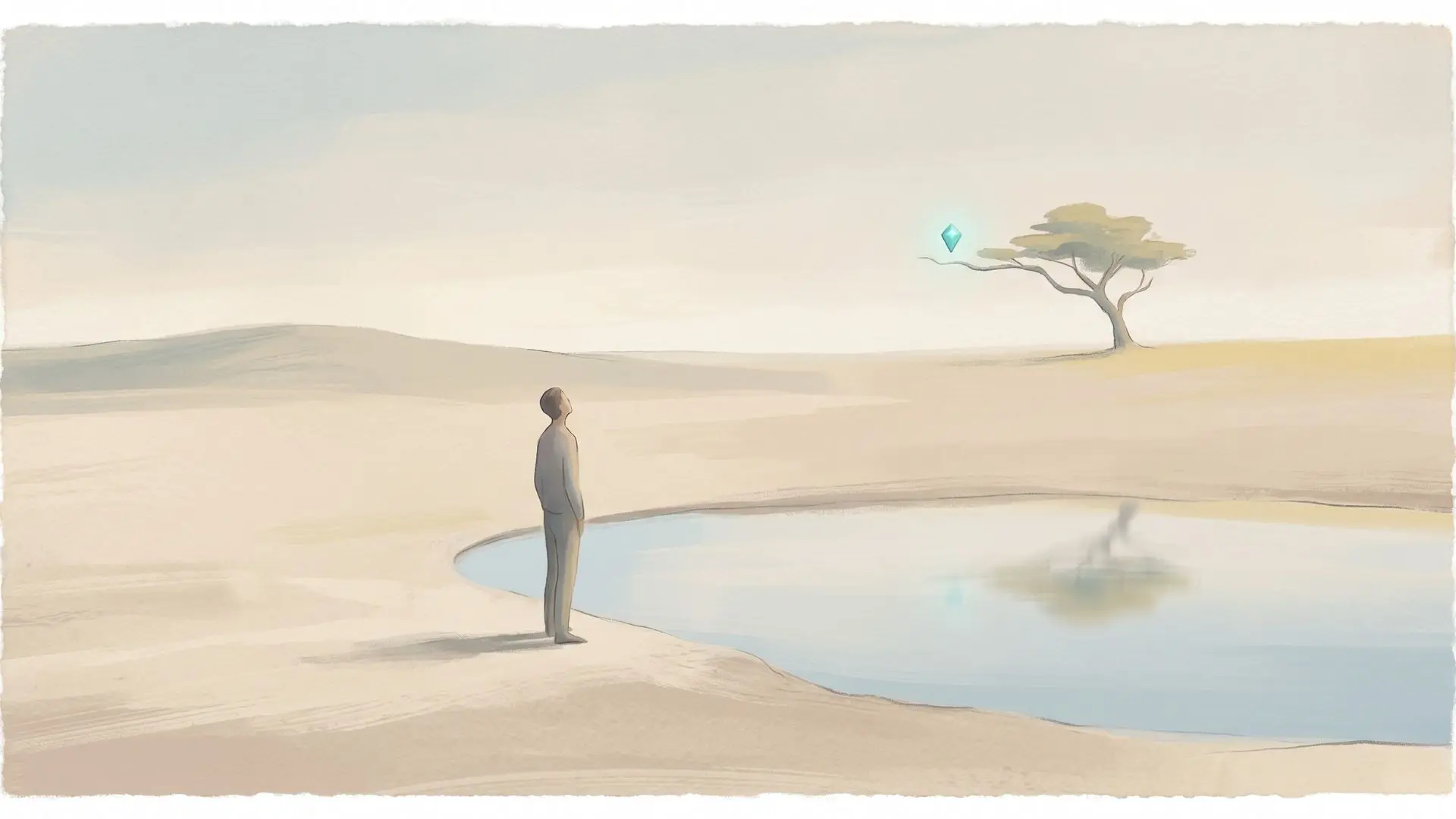
Mahosadha walked to the pond. He stood still. He looked not into the water but around it. And then he saw it. The gem was not in the pond at all. It was a reflection. The real gem was sitting on a palm tree on the bank, shining down into the water.
Nobody had found it because everyone was too busy draining the pond.
I think about this story every time I sit across from a leader who is exhausted.
You are that king.
And you have been draining the pond for years.
Not because you are doing it wrong. But because nobody told you that the gem you are looking for has never been where you have been searching for it.
You hired the right people. You refined the strategy. You invested in systems. You pushed harder when results slowed. You showed up even when every part of you wanted to stop.
And yet something still feels missing. There is a gap between how much you are doing and how good it actually feels. Between the success that is visible on paper and the clarity that is supposed to come with it.
That gap is real. And it is not a strategy problem.
Let me ask you something that most leadership conversations never ask.
On any given day, what is the quality of your inner state when you walk into your most important decisions?
Are you calm? Genuinely clear? Or are you running on adrenaline, carrying last night’s worry into this morning’s meeting, pretending to be more settled than you actually feel?
Because here is what I have seen across forty years of working with founders, CXOs, and high performers across the world. In every keynote, every boardroom conversation, every one on one with a leader who has built something real, the problem is almost never capability. What quietly erodes performance is inner noise.
Overthinking that masquerades as analysis. Fear of failure that disguises itself as high standards. Emotional fatigue that presents itself as busyness. These are not character flaws. They are what happens when your inner operating system is under constant pressure with no space to recalibrate. And when your inner state is noisy, even your best thinking produces imperfect results.
This is what I mean when I talk about the Inner Operating System.
You live in two worlds simultaneously. The outer world of strategy, results, teams, and revenue. And the inner world of beliefs, emotions, awareness, and the quality of consciousness you bring to every decision.
Most leadership development spends almost all its time on the outer world. But your inner state determines your access to all of it.
A stressed mind knows the answer but cannot always find it under pressure. A reactive leader has the intelligence but loses trust through a single poorly handled moment. A mentally depleted founder cannot see the opportunity sitting right in front of them.
The inner world is not separate from business performance. It is the source of it.
This is what I built the S.H.E. Framework around. And it is the foundation of every conversation I have as a consciousness leadership speaker, whether I am speaking at Oxford, Porto, in a boardroom in India, or working one on one with a founder at a turning point in their business.
Spiritual Dynamics is your inner operating system. Your awareness, your values, your capacity to make decisions from clarity instead of pressure. This has nothing to do with religion. It is about the quality of consciousness you bring to leadership every day.
Human Potential is what becomes available when that inner system is functioning well. Your creativity, your presence, your ability to inspire rather than just instruct.
Economic Strategy is where both of these meet the real world. Growth, revenue, sustainable outcomes.
When all three are aligned, effort reduces, clarity increases, and growth stops feeling like something you have to force. When they are not aligned, you can have the best strategy in the room and still feel like you are pushing water uphill.
Back to the story.
Mahosadha did not work harder than everyone else. He simply stopped. Became still. And looked in a different direction. That stillness was not passivity. It was the most productive thing he did that day. Because from that place of quiet, he could see what all the effort had been obscuring.
The gem was never in the pond. It was always on the tree, reflecting down into the water. Visible to anyone who was still enough to look up.
The leaders I work with are not far from where they want to be. They are simply carrying more inner friction than they need to. And when that friction reduces, what becomes possible consistently surprises even them. Not because they became different people. But because they stopped draining the pond and started looking at the tree.
The next era of leadership belongs to the clearest. And clarity comes not from doing more. It comes from seeing better.
That is the work. And in my experience, ninety nine percent of leaders keep draining the pond. The one percent who transform look up and find the gem.
WATCH VIDEO NOW
More Like This
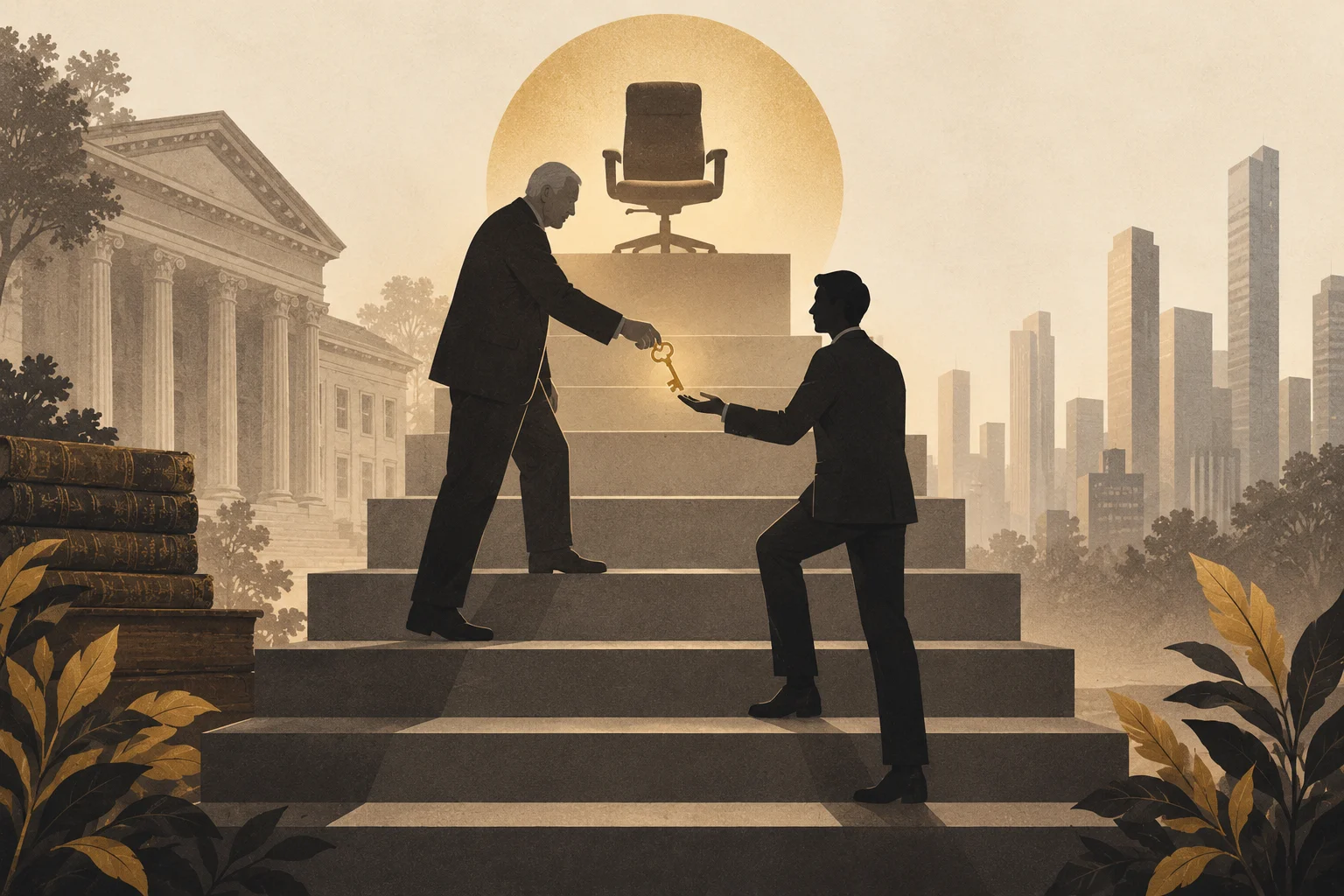
Succession in Family Business: How to Hand Over Control Step by Step
September 23, 2026
How to Disagree in a Family Business Without Hurting the Family
September 16, 2026
Can Conscious Leadership Really Drive Business Profitability?
August 27, 2026
Succession in Family Business: How to Hand Over Control Step by Step
September 23, 2026