
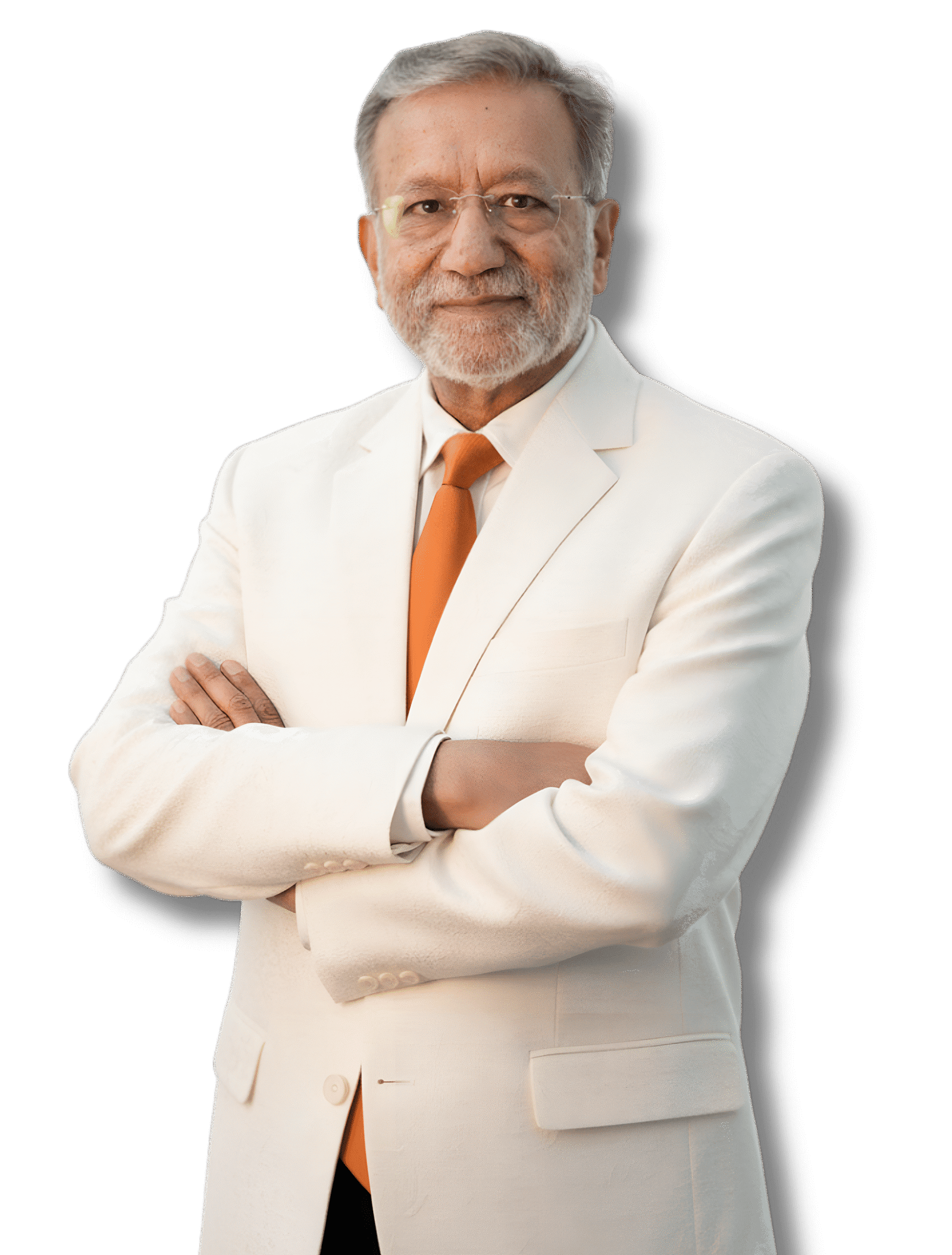
Hi! I'm Sandeep Amar Gupta
Helping harness Consciousness (Inner Operating System) for sustainable results, income & peace.
Every founder who delays the handover has a reason. The reason they give is almost never the real one.
Founders do not delay succession because they are disorganised. They delay because handing over the company forces a hard question: who am I if I am not this? Research now treats founder succession as a psychological problem, not a planning problem. The cost is not emotional. It is commercial, and the whole company pays it. The answer is not a better plan. It is a better Inner Operating System.
The sentence nobody questions
Ask a founder why they are still involved in everything, two years after naming a successor. You will hear the same answer.
They are not ready yet.
It sounds fair. It sounds like care and good judgment. The board accepts it. The family accepts it. The successor accepts it too, at least in the first year.
It is almost never true.
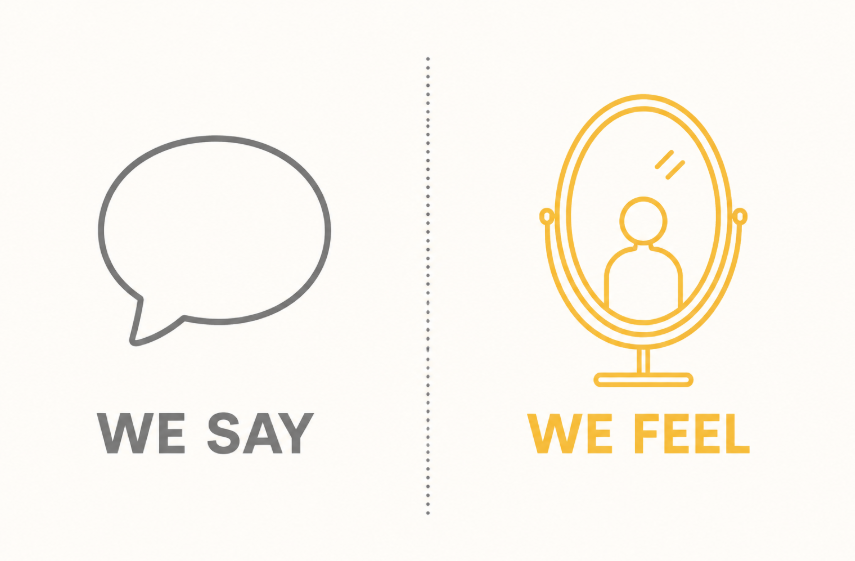
Coaches who guide founders through these transitions hear a different answer later, when the founder is honest. It sounds closer to this: “I don’t know who I am if I’m not this.”
That is not a weakness. It is what thirty years of full commitment does to a person. But it is a different problem. And more time will not solve it.
Why this happens to strong founders
Psychologists call it identity fusion. Slowly, the line between the person and the company disappears.
For fifteen years, family business research has pointed the same way. Succession is not mainly a money problem or a governance problem. It is a personal one. It simply shows up in money and governance decisions.
Founder-led firms plan for succession far less than firms run by the next generation or by professional CEOs. The reason is simple. Succession makes a founder think about getting older, losing control, and not being needed. Most people prefer to delay that.
One study found that 58% of founders find it hard to let go of control.
Here is the difficult part. This fusion is the reason the company worked. Nobody builds something big while keeping a safe distance from it. Total commitment is the fuel. Later, the same commitment becomes the block. The quality does not turn bad. The situation changes, and the same quality starts to produce the opposite result.
This is why “be more disciplined about the handover” does not work. Discipline cannot answer a question about identity.
The cost is not a feeling
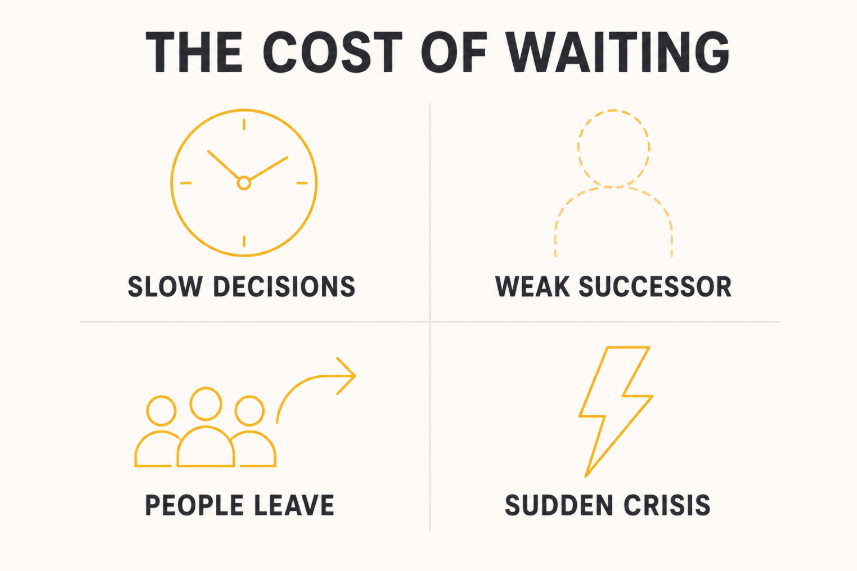
A founder who cannot let go creates the same problems in every company. None of them appear in the accounts with a clear name.
Decisions become slow. Everything important waits for one person’s diary. The company moves at the speed of one calendar.
The successor loses respect. You give them authority in public, then change their decisions in private. The team learns very quickly where the real power sits.
Good people leave quietly. Strong managers rarely complain. They see there is no space above them, and they take the next offer.
Risk sits in one head. The key relationships and the key knowledge live with one person. Buyers and banks notice this, and they reduce the price.
The handover happens at the worst moment. A handover you delay long enough does not disappear. It arrives with illness, a crisis or exhaustion, and no time to prepare.
None of this is what the founder wanted. It is what happens when an unanswered question sits at the top of a company.
Why better planning does not fix it
There is no shortage of succession advice. Lawyers, tax plans, governance rules, family agreements, leadership assessments. Founders who delay for ten years usually have all of it already.
That is the clue. If the problem were technical, the technical answers would have worked.
Sandeep Amar Guppta has worked with founders and organisations for 45 years. What he has found is this: the difference between companies that hand over well and companies that get stuck is not the plan. It is the thinking of the person making the plan. He calls this the **Inner Operating System** — the values, clarity and self-knowledge under every visible decision.
Strategy, structure and succession documents are results. The Inner Operating System is what produces them. Change the result and nothing holds. Change the system and the results change by themselves.
One client came to Sandeep with an enterprise value of $630M. Good strategy. Strong team. From outside, everything looked fine. Twelve months later the enterprise value was $1.47B — a 133% increase. No new strategy. No new product. No restructuring.
“Strategy was sound and the team capable – what shifted was the inner operating system behind every decision.”
The handover is the same idea in its most personal form. When a founder becomes clear about who they are outside the company, the succession problem is not solved. It disappears. The plan they could not act on for six years becomes easy to act on in one.
This is what Sandeep means by conscious profitability. Profit is not something you trade against your values. It is what happens when the values are real — including the value that says this was never mine to keep forever.
The S.H.E. Framework holds three things together: Spiritual Dynamics, Human Potential and Economic Strategy. Succession is where missing the first two becomes expensive. A handover planned only as a financial event, by a founder who has not done the personal work, is usually the handover that gets delayed.
Two laws that explain most of this
All four of Sandeep’s Laws of Conscious Profitability apply to a handover. Two of them explain almost everything that goes wrong in this one.
The Law of Alignment. When your words about the handover and your actions do not match, people believe your actions. A handover you announce but do not mean costs more trust than saying nothing at all.
The Law of Integration. What is unresolved inside a founder always appears inside the organisation. Not immediately, but always. An unanswered question about identity becomes two bosses, a successor who cannot commit, and a team that quietly works around the official structure.
Four questions to sit with
If the company did well without you tomorrow, what would you feel first — relief, or loss? What have you built outside this business in the last five years: not planned, but built? You say your successor is not ready, so can you name the exact decisions that would prove they are, and have you told them what those decisions are? And if nobody could reach you for ninety days, starting Monday, what would break, and how long have you known that? Most founders find the first question the hardest. It is also the one that matters.
Another way to see it
A leader who took over his family business at 29 said later that letting go is much harder than taking hold. He is right. And it is usually said with regret.
But the meaning is wrong.
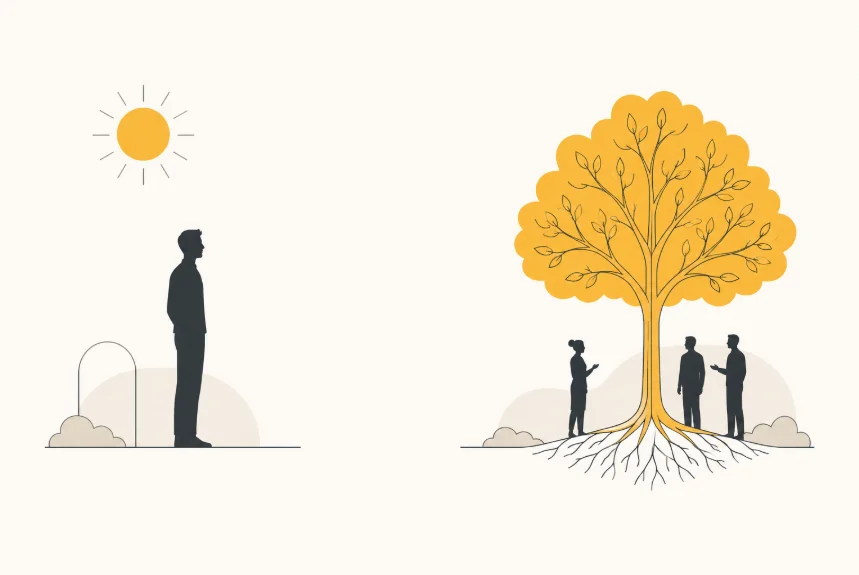
Letting go is not the end of building. It is the last and hardest part of building. It is the moment you find out whether you built a company or an extension of yourself. A business that cannot run without you is not proof that you matter. It is unfinished work.
Founders who do this well do not become less important. They become permanent. The thinking passes on. The standard holds. The company keeps going. That, not the valuation, is what people mean when they say someone built something that lasts.
The question was never whether they are ready.
About Sandeep Amar Guppta
Known as ‘The Conscious Profitability Man,’ Sandeep Amar Guppta is a keynote speaker, author, and creator of The S.H.E. Framework. With over 40 years’ experience, he has the rare gift of making the deep practical, the complex simple, and the spiritual profitable – a message he has brought to Oxford University, the Science of Consciousness Conference, the ISUD World Congress, and corporate stages across continents.
He helps leaders bring spirituality and money together by upgrading what he calls the Inner Operating System: the invisible software beneath every visible result. His conviction is simple. Profit and spiritual dynamics were never meant to be separate, and the organisations that last are those that hold both.
Sandeep is a Fellow Chartered Accountant with a postgraduate diploma in Theology. He also holds certifications in interpersonal neurobiology and design thinking. He chairs the Professional Speakers Summit (PSS) for its 2027 edition.
Here, he writes for leaders who want to build organisations that last and leave legacies that matter.
More Like This
Why family business succession planning fails in India
August 20, 2026

Legacy vs. exit: the question every founder avoids until it’s too late
August 3, 2026

Why family business succession planning fails in India
August 20, 2026