Why family business succession planning fails in India
August 20, 2026
By Sandeep Amar Gupta and Team

Hi! I'm Sandeep Amar Gupta
Helping harness Consciousness (Inner Operating System) for sustainable results, income & peace.
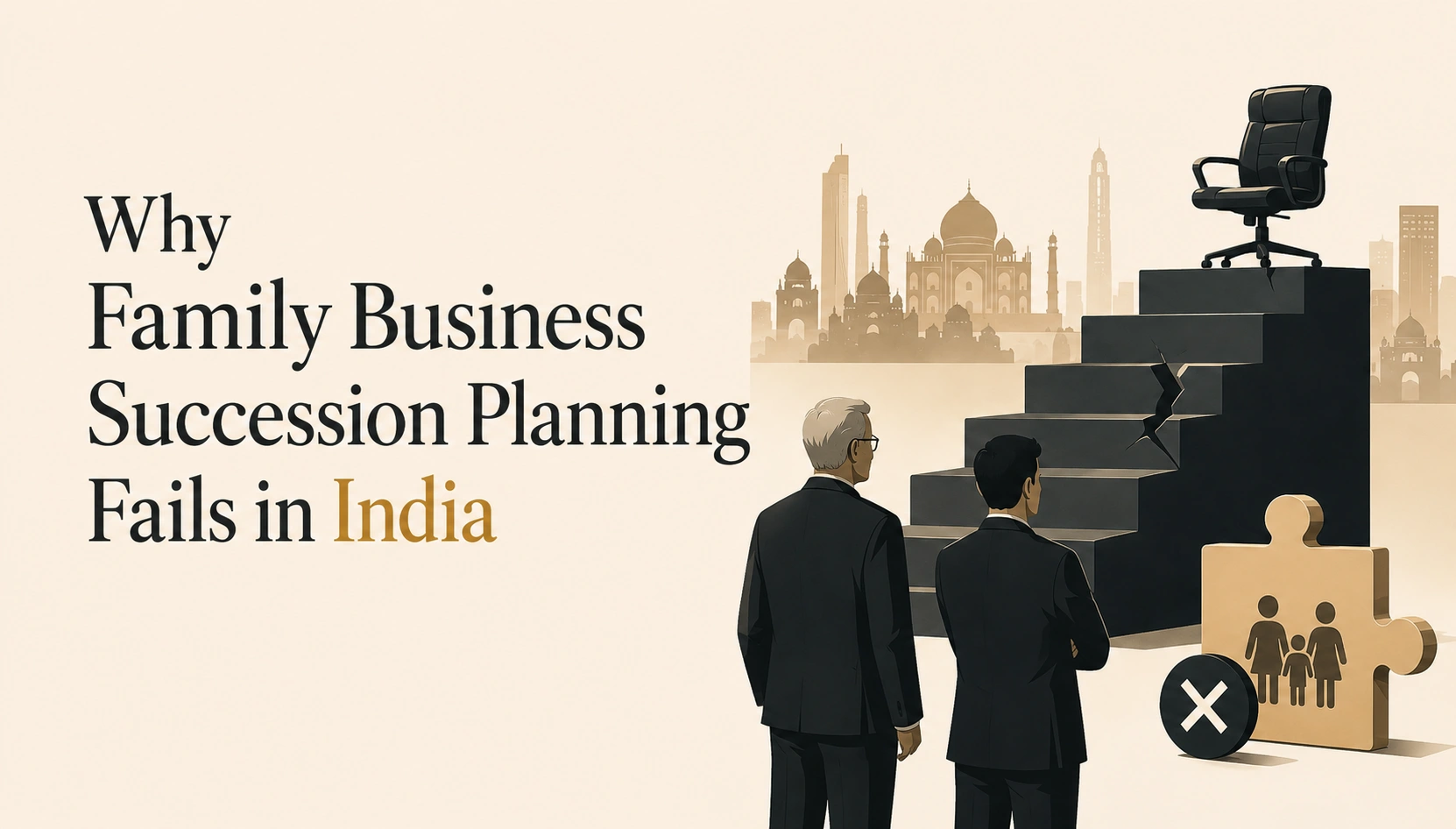
Most Indian business families plan the transfer of shares, titles and control. That is inheritance. It can be completed in a day. Succession is something else. It is the slow transfer of trust, judgement and stewardship into a person. Deloitte India found that 72% of family businesses have a succession plan. Only 27% believe it will work. That gap is not a legal gap. It is a human one, and no document closes it.
The meeting is already fixed
The lawyer has the draft ready. The chartered accountant has worked out the share transfer. The date is in your diary.
You have thought about this for years. Now it is finally moving.
Your son or daughter has the title. The announcement goes to the bank and the senior team. Everyone congratulates you.
Two years later, almost nothing has changed. Every real decision still comes to you.
This is the most common outcome in Indian family business succession planning. Not a fight. Not a court case. Just a handover that never quite happened.

Inheritance is not succession
These two words are used as if they mean the same thing. They do not.
Inheritance transfers: shares, a title, control, wealth, a position, the rules, the business.
Succession transfers: stewardship, trust, capability, wisdom, a purpose, the reason behind the rules, the ability to rebuild it.
Look at the two lists again. The left side can be given in a day. The right side has to be built in people, over years.
Most families only work on the left side. Then they wonder why the business feels unsafe in the new hands.
Inheritance determines ownership. Succession determines the future.
What the research shows
The numbers point in one direction.
Deloitte India reports that 72% of family businesses have a succession plan, and only 27% believe it works.
PwC in 2026 found that 52% of Indian respondents say the senior generation is the biggest barrier to next-generation leadership. Globally that figure is 29%. The same study found 21% have postponed the handover because of uncertainty, against 10% globally.
HSBC Global Private Banking reported in 2025 that only 7% of the Indian next generation feel any duty to take over. At the same time, 79% of owners plan to hand the business to family.
Read those two numbers together. The plan assumes a willingness that has not been checked.
Research by Williams and Preisser, covering 3,250 families, found that 60% of failed handovers came from weak communication and trust. A further 25% came from heirs who were not prepared. Only a small share came from tax or legal errors.
The Family Business Institute figures are also widely quoted. Around 30% of family businesses reach the second generation, 12% reach the third and 3% reach the fourth.
One honest note. The Williams and Preisser and Family Business Institute studies have been questioned on method. They are presented here as the researchers’ findings, not as final proof. The direction of all of this research is still the same.
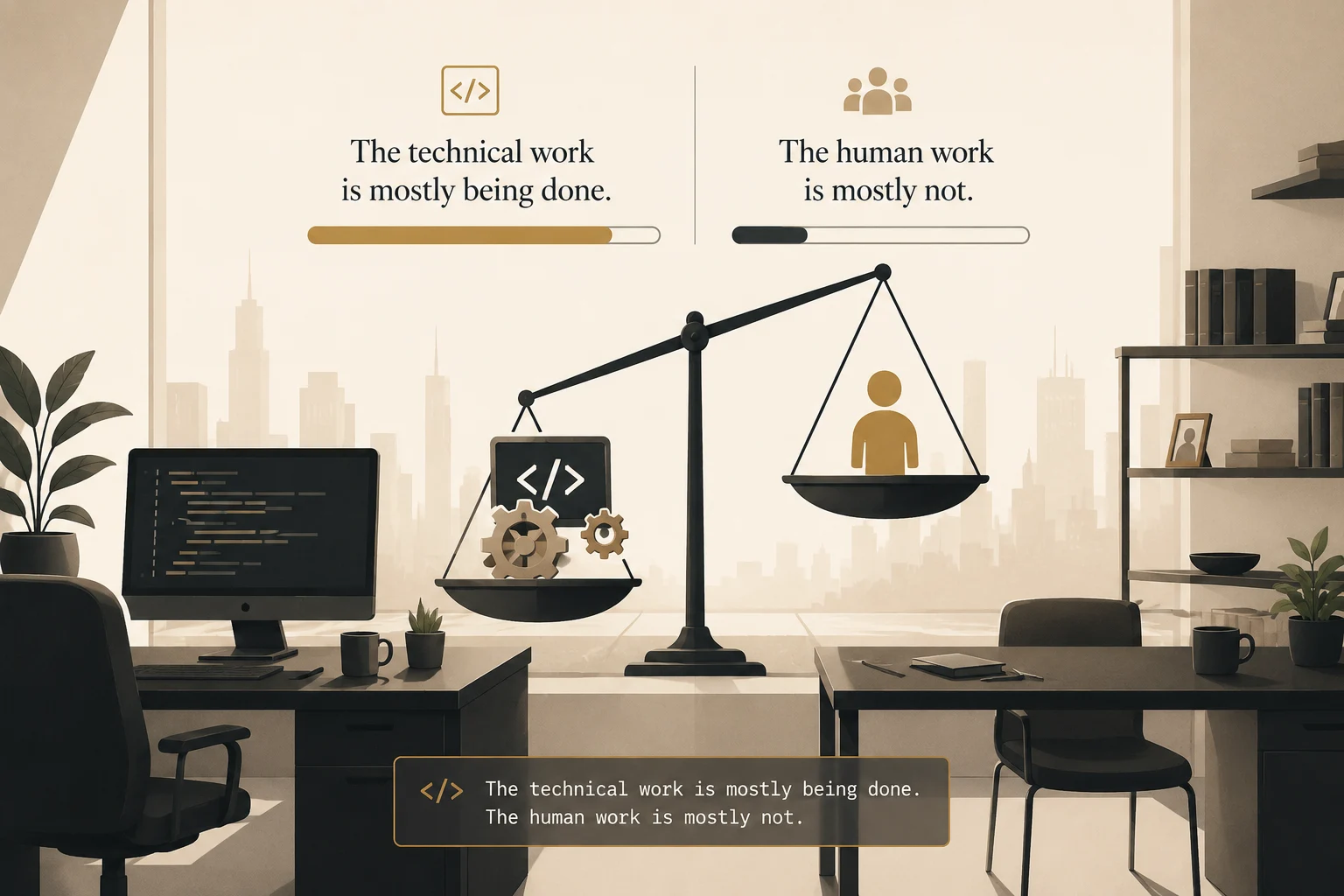
The technical work is mostly being done. The human work is mostly not.
How the damage shows up
It does not arrive as a crisis. It arrives quietly, over about three years.
Decisions become slow. Everything important waits for one person’s diary. The company moves at the speed of one calendar.
Good people leave quietly. Strong managers rarely complain. They see there is no space above them, and they take the next offer.
The successor stops trying. After the third decision is reversed in front of the team, he stops proposing. He waits to be told. You then say he lacks initiative, and you are right.
Customers keep your number. The relationships never move down a generation. On the day you are not available, the business has one point of failure with a brand name on it.
The family stops raising it. Nobody wants the argument at dinner. Silence starts to look like agreement.
None of this shows in the balance sheet for a long time. Then it shows in all of it at once.
Why a better plan does not fix it
At this point most founders ask for a better document. A sharper family constitution. A cleaner shareholder agreement.
Those things matter. They are not the cause.
Strategy, structure and succession documents are results. The Inner Operating System is what produces them.
The Inner Operating System is the layer underneath every business decision you make. Your values, your clarity, your self-knowledge, your reason for choosing one option over another. It is invisible. It runs everything.
For forty years you decided. That was correct. The habit built the company.
Now the same habit is the block. The quality did not turn bad. The situation changed.
The next generation inherits the outer structure. They rarely inherit the inner software that ran it.
What the real work looks like
It is slower and less impressive than a signing ceremony.
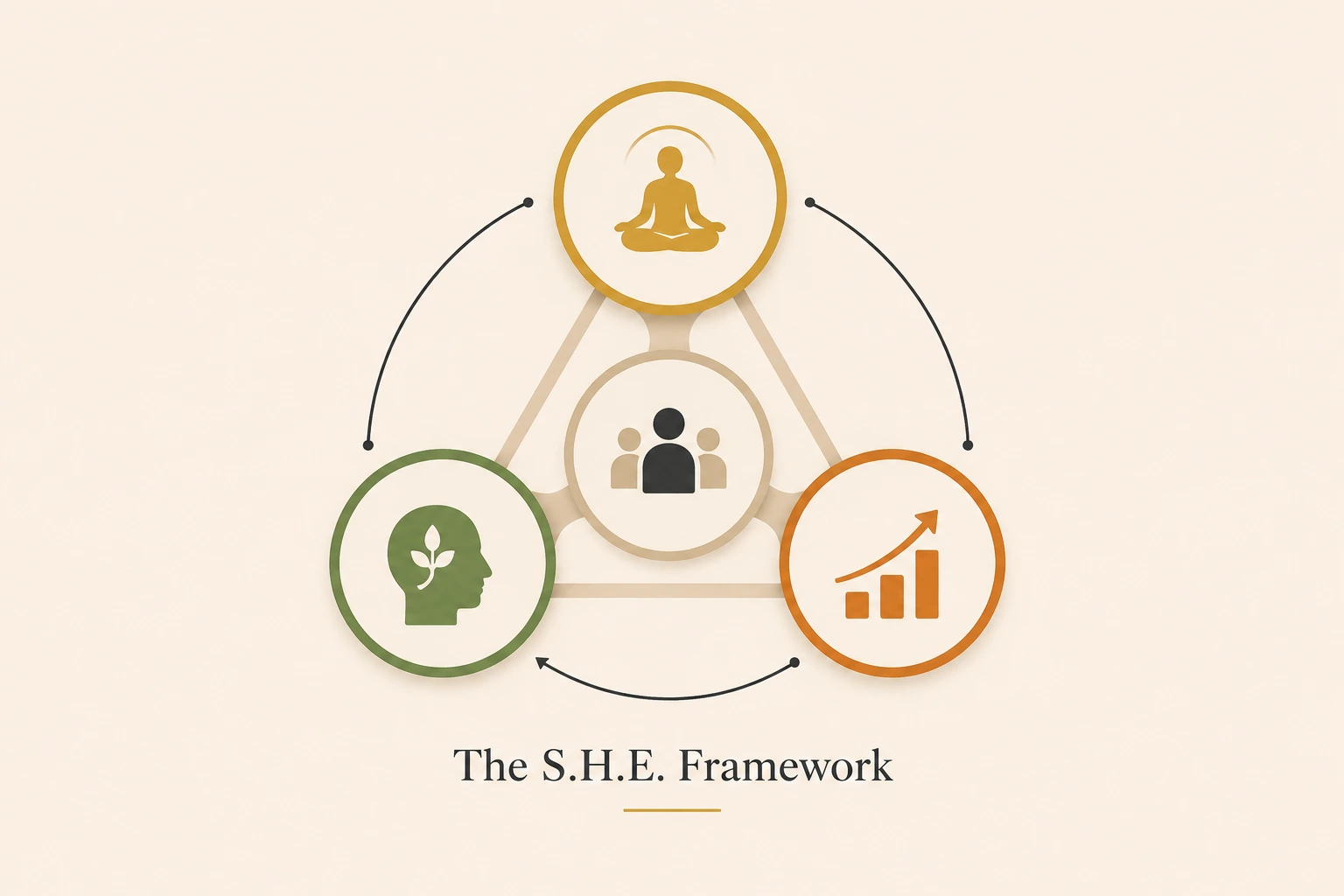
Assess. Find out where the family actually is, not where it says it is. Ask the successor separately. Ask the non-family CEO separately.
Align. Get ownership, family and leadership pointing the same way. This is the Law of Alignment. When your words and your actions do not match, people believe your actions.
Prepare. Give the successor real decisions with real consequences, and let some of them go wrong. Judgement is not taught. It is built.
Transition. Move authority in stages, on named dates, in writing. A handover without a date is a wish.
Sustain. Build governance that survives you. Not rules that need your judgement to interpret them.
Two families make the point. Gucci in the third generation destroyed a luxury empire. They were not incompetent. They had no shared way to decide when they disagreed. They inherited authority without the logic for using it.
Tata separated ownership from management, wrote the values down, and built governance that did not depend on one person surviving. The business outlasted the founder by design.
The difference was not talent. It was whether the inner operating system was deliberately transferred or simply assumed to pass on by itself.
Five questions to sit with
Answer these alone. Do not discuss them yet.
If the company did well without you tomorrow, what would you feel first: relief, or loss?
When did you last let your successor’s decision stand, knowing you would have chosen differently?
Have you ever actually asked your child if they want this?
Who in your senior team has a relationship with the next generation, and not only with you?
If you stopped tomorrow, what would people say you built, apart from the numbers?
The third question is the hardest, and most founders have never asked it. They have assumed the answer for twenty years.
Another way to see it
Letting go is not the end of building. It is the last and hardest part of building. A business that cannot run without you is not proof that you matter. It is unfinished work. You are not being asked to become smaller. You are being asked to build the one thing you have not built yet. The plan was never the problem.
Start with a conversation. Thirty minutes, in full confidence, to find where the real gap is. Bring one question your family has been carrying. Talk to Sandeep
Frequently asked questions
What is succession planning in a family business?
Succession planning is the process of preparing people, not only papers. It covers who will lead, who will own, how decisions will be made, and how the next generation will be built up to carry them. Transferring shares and titles is inheritance planning. Succession planning is the longer work of transferring capability, relationships, trust and stewardship. Both are needed. Families usually complete the first and stop.
When should a founder start succession planning?
Earlier than feels necessary. The work of preparing a successor takes years, because judgement is built through real decisions with real consequences. PwC found in 2026 that 21% of Indian family businesses have postponed the handover because of uncertainty, against 10% globally. Waiting for a natural moment is the most common mistake. A crisis is not a plan. Starting while you are healthy and active gives you the one thing you cannot buy later, which is time.
Why do most family businesses fail across generations?
Research from the Family Business Institute suggests around 30% reach the second generation, 12% reach the third and 3% reach the fourth. Williams and Preisser, studying 3,250 families, found that 60% of failed handovers came from weak communication and trust, and another 25% from unprepared heirs. Tax and legal errors were a small part. The failure is usually human, not technical.
Is a family constitution enough?
A family constitution is useful, and it is not enough on its own. A document records what a family has agreed. It cannot create the agreement. Families who write a constitution without doing the honest conversations first end up with a well-drafted paper that nobody follows. The value comes from the conversations that produce it, and from the governance that keeps it alive afterwards.
What if my children do not want the business?
Then it is better to know now. HSBC Global Private Banking reported in 2025 that only 7% of the Indian next generation feel any duty to take over, while 79% of owners plan to hand over to family. That gap causes years of quiet damage. A child who says no honestly is easier to plan around than a child who says yes out of duty. There are other routes, including professional leadership with family ownership.
How do I know if my family is ready?
Ready families can hold a disagreement without it becoming a fight. The successor makes decisions that stand. Senior managers and customers deal with the next generation directly. There are dates, not intentions. If any of those are missing, the gap is worth finding before it finds you.
About Sandeep Amar Guppta
Known as ‘The Conscious Profitability Man,’ Sandeep Amar Guppta is an international keynote speaker, author, and creator of The S.H.E. Framework. With over 40 years’ experience, he has the rare gift of making the deep practical, the complex simple, and the spiritual profitable. He has brought this message to Oxford University, the Science of Consciousness Conference, the ISUD World Congress, and corporate stages across continents.
He helps leaders bring spirituality and money together by upgrading what he calls the Inner Operating System: the invisible software beneath every visible result. His conviction is simple. Profit and spiritual dynamics were never meant to be separate, and the organisations that last are those that hold both.
Sandeep is a Fellow Chartered Accountant with a postgraduate diploma in Philosophy and Religious Studies. He also holds certifications in interpersonal neurobiology and design thinking. He chairs the Professional Speakers Summit (PSS) for its 2027 edition.
This blog carries his work to leaders who want to build organisations that last and leave legacies that matter.
Read more about Family Business Succession Advisory or work with Sandeep.

More Like This


Legacy vs. exit: the question every founder avoids until it’s too late
August 3, 2026