
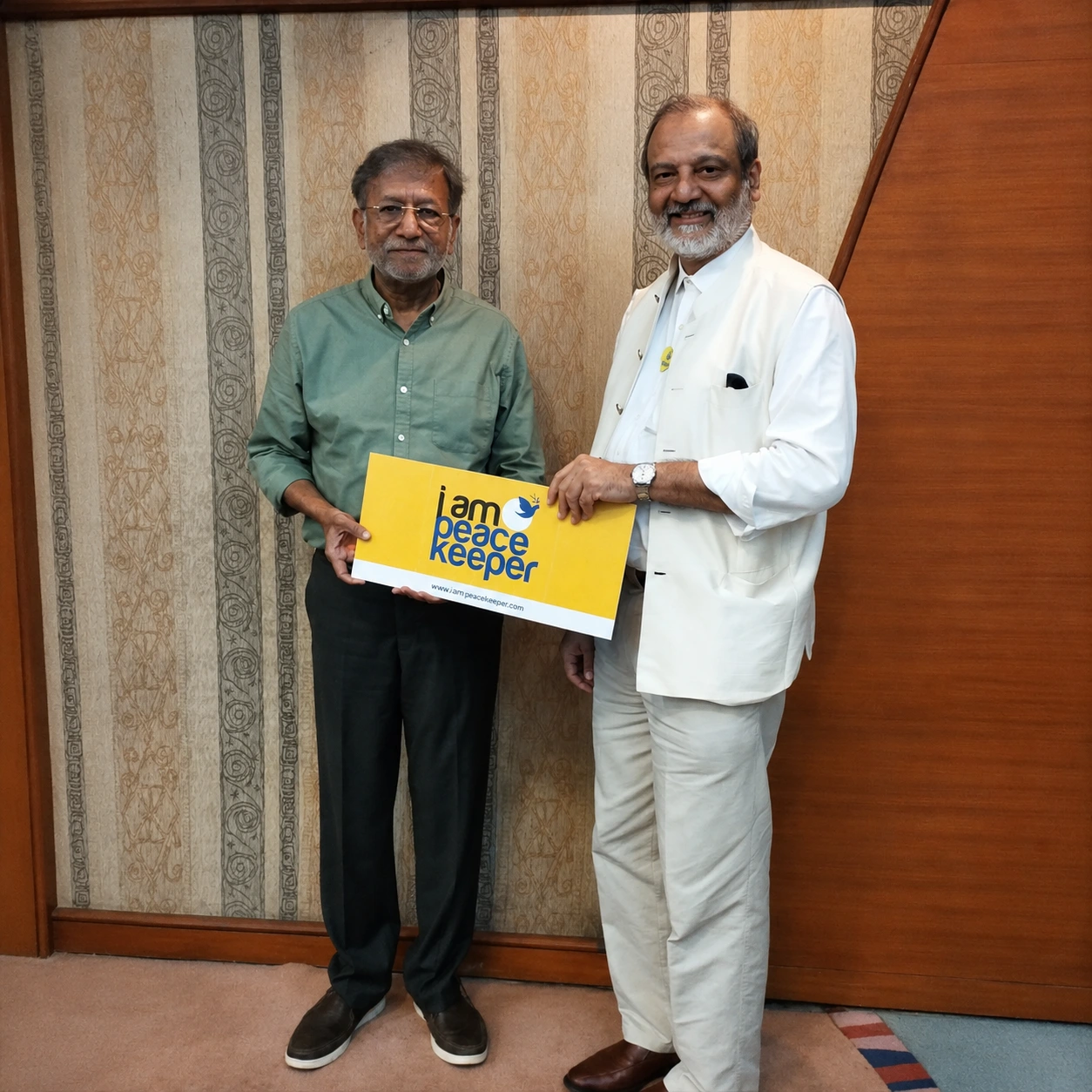
Sandeep Amar Guppta had the opportunity to meet Dr. Huzaifa Khorakiwala of the Wockhardt family. Around the same time, he became part of the I Am Peacekeeper Movement, a movement conceived and nurtured by Dr. Khorakiwala.
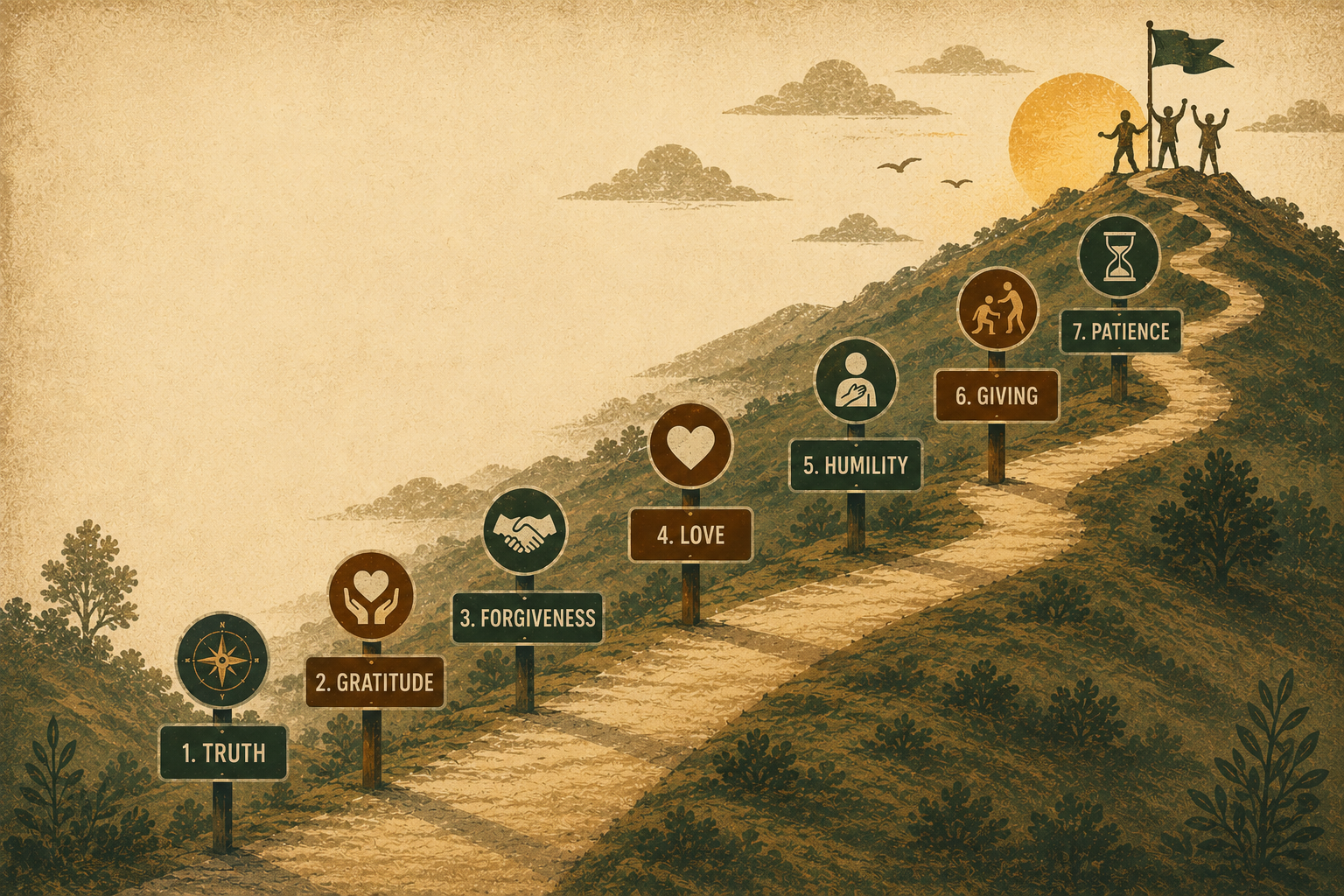
The movement is built around seven timeless human values:
Truth. Gratitude. Forgiveness. Love. Humility. Giving. Patience.
The interesting part is not simply the list. Many people can talk about values. Many can write about them. Many can even teach them. The more difficult question is whether those values can actually be seen in the way someone lives, communicates and makes decisions.
That was what stood out to Sandeep Amar Guppta. As he reflected on his meeting with Dr. Huzaifa Khorakiwala, the values appeared not just as ideas but as something visible in his purpose, conversations, decisions and actions. You can read the original LinkedIn reflection by Sandeep Amar Guppta.
That difference matters enormously in business. A value written on a wall does not change a company. A value lived consistently by its leaders can.
Seven Values, Seven Leadership Lessons
The seven values connected with the I Am Peacekeeper Movement also offer useful lessons for business leaders.
1. Truth Builds Clarity
Truth is more than simply avoiding lies.
In leadership, truth means being willing to see reality as it is.
A leader who can acknowledge a problem early gives the organisation a chance to solve it. A leader who hides a problem to protect appearances may only make the eventual cost higher.
Truth creates clarity, and clarity improves decisions.
It also creates trust. Employees are more likely to speak honestly when they believe their leader genuinely wants to know what is happening rather than only hearing good news.
2. Gratitude Strengthens Relationships
Business is built through relationships.
Employees, customers, partners, suppliers and communities all contribute to the value a company creates. When leaders recognise that contribution, people feel seen rather than simply measured.
Gratitude does not mean lowering standards or avoiding accountability.
It means recognising the people behind the results.
A leader who appreciates contribution can create stronger relationships, and stronger relationships can create a healthier working environment.
3. Forgiveness Creates Space to Learn
Mistakes are unavoidable in any organisation.
The question is what happens after one.
A leader who never forgives can create fear. When people become afraid of making mistakes, they may stop experimenting, stop speaking up and start hiding problems.
Forgiveness does not mean ignoring accountability. It means allowing people to learn, correct their behaviour and move forward.
That creates a culture where improvement becomes possible.
4. Love Makes Leadership Human
Love may sound unusual in a business conversation, but it can be understood simply as genuine care.
Do leaders care about the people behind the job titles?
Do they care about whether people are growing?
Do they care about the relationships they are building, rather than only the transactions they are completing?
Human-centred leadership starts with seeing people as people.
When employees feel that their leader genuinely cares about them, trust becomes easier to build. And trust is one of the foundations of effective teamwork.
5. Humility Keeps Leaders Learning
A leader does not need to have every answer.
In fact, believing that you have every answer can become a serious leadership weakness.
Humility allows a leader to listen, ask questions and learn from people with different experiences.
It also makes it easier to admit when something is not working.
In complex business environments, this can make a real difference because better decisions often come from better questions rather than faster answers.
6. Giving Builds Capability
Giving in leadership is not limited to financial generosity.
It can mean giving people time, attention, knowledge, responsibility, opportunities and credit.
A leader who constantly holds everything tightly may become the centre of every decision.
A leader who develops others creates capability beyond themselves.
That capability can eventually become one of the organisation’s greatest strengths.
7. Patience Improves Judgment
Patience does not mean moving slowly.
It means knowing when a reaction is necessary and when reflection is wiser.
Some business decisions require speed. Others become better when a leader pauses long enough to understand what is really happening.
A conscious leader learns the difference.
That pause can prevent emotional reactions, create better conversations and allow long-term consequences to be considered before a decision is made.
How Can Conscious Leadership Influence Profitability?
This is where the idea becomes practical.

Conscious leadership does not mean that becoming more spiritual or values-driven automatically creates more revenue.
The relationship is more direct than that.
Consciousness can influence the quality of decisions.
Better decisions can influence relationships.
Stronger relationships can build trust.
Greater trust can improve collaboration, loyalty and execution.
And better execution can contribute to sustainable business performance.
The connection can be understood simply:
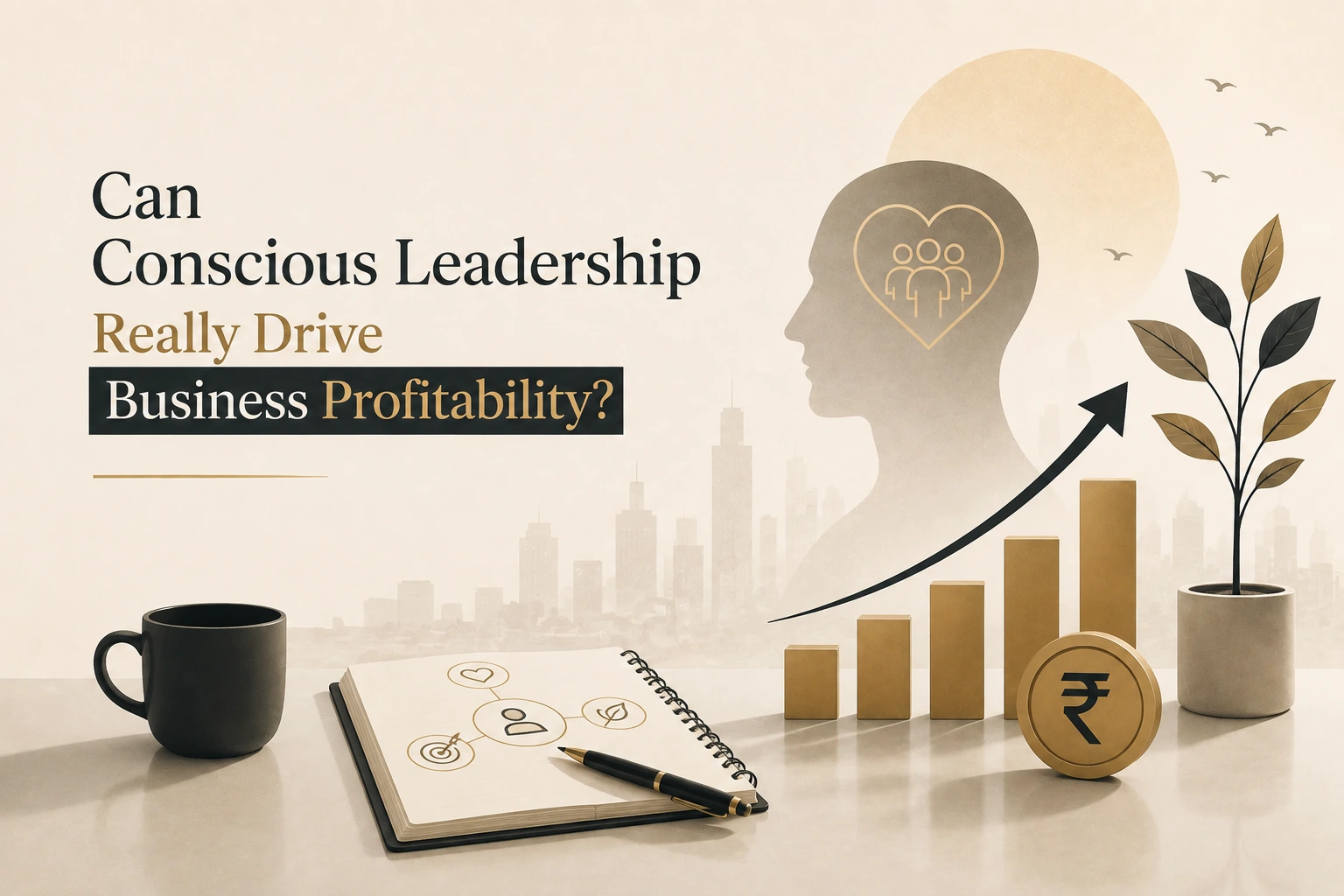
Consciousness → Better Decisions → Stronger Relationships → Greater Trust → Better Execution → Sustainable Profitability
This is why Conscious Profitability does not need to be understood as choosing values instead of money.
It is about understanding how the two can work together.
The S.H.E. Framework brings this idea together through three connected forces: Spiritual Dynamics, Human Potential and Economic Strategies. The framework positions these not as separate priorities, but as parts of one integrated approach to sustainable results.
The Real Test Is What Happens Under Pressure
Anyone can talk about values when business is going well. The real test comes when values become inconvenient. What happens when honesty could cost you a customer? What happens when admitting a mistake could affect your reputation? What happens when a team member needs another opportunity after making an expensive error? What happens when patience feels like weakness because everyone is demanding an immediate answer? That is where conscious leadership becomes visible. Values are not truly part of leadership because they are written in a presentation. They become part of leadership when they influence behaviour under pressure. This is also why alignment matters. If a leader says one thing but consistently behaves differently, people notice the gap.
They may not always talk about it.
But they feel it.
A related perspective appears in The Room Always Reads the Gap, which explores how people often respond not only to what a leader says, but to the alignment behind those words.
Being Human Can Be a Business Strength
Modern businesses compete through more than products and pricing.
They compete through trust, culture, relationships, reputation, talent and the quality of their decisions.
These things can be difficult to measure on a balance sheet, but they influence how an organisation operates.
A leader who listens can discover problems earlier.
A leader who communicates honestly can reduce confusion.
A leader who develops people can create stronger teams.
A leader who builds trust can reduce the need for constant control.
A leader who understands their own reactions can make better decisions under pressure.
None of these guarantees profitability.
But together, they can create better conditions for profitability.
That is why conscious leadership should not be confused with becoming less ambitious.
It is about making ambition more aligned.
The goal is not less growth.
The goal is growth that does not quietly damage the people, relationships and culture required to sustain it.
What Can Leaders Do Differently?
Conscious leadership does not have to begin with a complicated programme.
It can begin with better questions.
Ask yourself:
What values guide my most difficult decisions?
Not the values written on the company website. The values you follow when the decision is uncomfortable.
Can my team see my values in my behaviour?
If people only know your values because they have read them somewhere, there may be a gap between intention and action.
What happens to my leadership when I am under pressure?
Pressure often reveals patterns that are invisible during calm periods.
Do I listen to understand or listen only to respond?
The quality of leadership depends heavily on the quality of information a leader is willing to hear.
What do I want my profitability to create?
Profit is an outcome. What matters is what that outcome makes possible for the business, its people and its future.
These questions are simple, but they can change the way a leader sees their role.
Conscious Profitability Is About Integration
The biggest misunderstanding may be that leaders have to choose between being commercially successful and being deeply human.
They do not.
A business can be ambitious and ethical. A leader can care about people and still make difficult commercial decisions. A company can pursue growth while thinking about long-term consequences. The real opportunity is integration. Spiritual Dynamics can provide purpose and values. Human Potential can help people develop their capacity to perform. Economic Strategy can turn that clarity into measurable business outcomes.
When these dimensions work together, profitability does not have to be treated as the enemy of purpose.
It can become one of the outcomes of a healthier system.
This is the broader idea behind Conscious Profitability and the work around the Inner Operating System.
The Question Leaders Should Really Be Asking
Perhaps the question is not:
“Should I choose consciousness or profitability?”
A better question is:
“How can the quality of my consciousness improve the quality of my decisions—and therefore the quality of the results I create?”
The example of Dr. Huzaifa Khorakiwala offers a simple reminder. Values become powerful when they move from words into behaviour. Truth becomes powerful when it is practised.
Humility becomes powerful when it changes how we listen. Patience becomes powerful when it changes how we decide. Giving becomes powerful when it develops other people. And consciousness becomes meaningful when it changes the way we lead. For leaders, that may be the real opportunity. Not to become less ambitious.
Not to choose purpose instead of profit.
But to build a way of leading where better human decisions and better business decisions can strengthen each other.
Profit tells you what your business earned. Conscious leadership asks what your business became while earning it.
Frequently Asked Questions
Can conscious leadership improve business profitability?
Conscious leadership can influence profitability by improving the quality of decisions, relationships, trust, collaboration and execution. It does not guarantee profit, but it can create stronger conditions for sustainable business performance.
What is the connection between consciousness and profitability?
Consciousness influences how leaders think, decide and respond. When greater awareness leads to better decisions and stronger relationships, those improvements can contribute to better execution and sustainable profitability.
What are the seven values of the I Am Peacekeeper Movement?
The seven values highlighted in the movement are Truth, Gratitude, Forgiveness, Love, Humility, Giving and Patience. The important leadership lesson is not simply knowing these values, but living them through everyday behaviour and decisions.
What is conscious leadership in business?
Conscious leadership means leading with greater awareness of your values, thinking patterns, decisions and behaviour. It involves understanding how you respond to pressure and making decisions that are aligned with both human and business considerations.
Is conscious leadership the same as being a soft leader?
No. Conscious leadership does not mean avoiding difficult decisions, lowering standards or putting profit aside. It means making decisions with greater awareness, clarity and alignment. A conscious leader can still be ambitious, commercially disciplined and decisive.
How can leaders practise conscious leadership every day?
Leaders can begin by examining the values behind difficult decisions, listening more carefully, noticing their behaviour under pressure, admitting mistakes, developing others and checking whether their actions match what they say they believe.
How does the Inner Operating System relate to conscious leadership?
The Inner Operating System describes the internal beliefs, values and thinking patterns that influence visible decisions and results. Improving this internal system can help leaders become clearer, more aligned and more consistent in how they lead.
What is Conscious Profitability?
Conscious Profitability is the idea that consciousness and profitability do not have to be opposing goals. The quality of a leader’s consciousness influences the quality of decisions, while profitability can become one of the outcomes of those decisions.